Out of bounds: KWS warns against fishing at Lake Nakuru after Joho’s directive
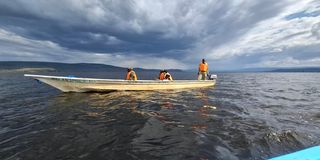
Kenya Wildlife Service (KWS) officer intensify boat patrol at the Lake Nakuru National park following Mining and Fisheries Cabinet Secretary Hassan Joho’s announcement last Friday that fishermen should be allowed to fish in the lake.

Nakuru security agencies, including the Kenya Wildlife Service (KWS) and the National Police Service, have warned fishermen against accessing Lake Nakuru National Park, saying anyone found attempting to fish in the protected area will be arrested.
A spot check by Mtaa Wangu established that six boats were actively patrolling the lake and more officers on land to deter fishermen from accessing the park.
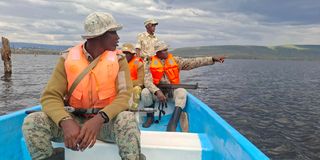
Kenya Wildlife Service (KWS) officer intensify boat patrol at the Lake Nakuru National park on October 19,2026 following Mining and Fisheries Cabinet Secretary Hassan Joho’s announcement last Friday that fishermen should be allowed to fish in the lake.

The heightened surveillance follows an October 16 pronouncement by Mining, Blue Economy and Maritime Affairs Cabinet Secretary Hassan Joho, who said fishermen should be allowed to access the lake during an empowerment event.
Since the announcement, youth from communities surrounding the park have reportedly made increased attempts to access the lake for fishing, prompting authorities to reinforce security and conservation measures.
Lake Nakuru National Park Assistant Director Martin Omondi said the Kenya Wildlife Service had deployed officers to secure the park, protect wildlife and ensure the safety of visitors.
“As you have seen around here, the park is well protected because this is a protected area. We continue to deploy our men around here to ensure that our wildlife is safe, the park is safe, including our visitors,” said Omondi.
He cautioned residents against consuming or selling fish harvested from the lake, saying studies had indicated that the fish was toxic and unsafe for human consumption.
“One thing that I want to tell members of the public is that the fish in this lake is toxic from the studies which have been done. We are discouraging members of the public from taking fish from Lake Nakuru because science has already told us that the fish here is not safe,” he said.
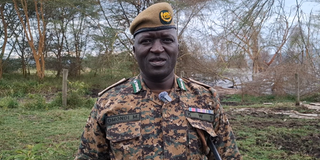
Lake Nakuru National Park Assistant Director Martin Omondi shares on how they have beefed up security at the park to deter fisherman is accessing the protected area.
Omondi urged fishermen to seek alternative livelihoods instead of venturing into the protected area, warning that consuming fish from the lake could pose public health risks.
He further noted that the park hosts dangerous wildlife, including lions, buffaloes and hippos, rhinos which could threaten anyone entering the area.
According to Omondi, even wildlife officers conducting patrols face risks from hippos, warning that fishermen venturing into the lake could expose themselves to similar dangers.
He also cited unpredictable waves and water conditions as additional hazards, noting that the lake had recorded numerous drowning incidents involving fishermen.
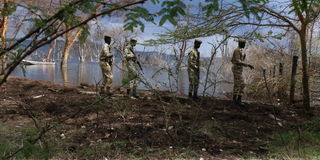
Kenya Wildlife Service (KWS) officer intensify patrol along the Lake Nakuru National park fence on October 19,2026 following Mining and Fisheries Cabinet Secretary Hassan Joho’s announcement last Friday that fishermen should be allowed to fish in the lake
“This year alone, we have had quite a number of drowning cases, just from the fishermen. There are somewhere above 20 drowning cases. So it is a huge risk,” he said.
Omondi urged residents to stay away from the lake, insisting that only activities compatible with conservation should be allowed within the park.
Nakuru County Police Commander Samuel Boit maintained that the law governing access to the protected area remained unchanged, dismissing Joho's remarks as a political pronouncement.
“The law has not been amended. That was just a political pronouncement. As police, we maintain that the lake is a protected area, and we will enforce its protection,” Boit said.
He warned that anyone attempting to access the lake for fishing would be arrested as security agencies continued enforcing restrictions.
The security team reiterated that Lake Nakuru National Park would remain protected and urged members of the public to avoid entering the lake to fish.