Show us the evidence: Nakuru civil society groups challenge CS Joho on Lake Nakuru fishing safety

Mining, Blue Economy and Maritime Affairs Cabinet Secretary Ali Hassan Joho during the youth and women empowerment program at the ASK show on October

The Nakuru County Civil Society Organisations Forum (NACCSOF) has challenged Mining, Blue Economy and Maritime Affairs Cabinet Secretary Ali Hassan Joho’s declaration allowing residents to fish in Lake Nakuru, demanding fresh scientific evidence to establish whether the fish are safe for human consumption.
The forum says the announcement risks exposing residents to health hazards in the absence of new test results clearing fish from the lake, where government research conducted in April found elevated lead levels in some samples and parasites in the fish.
In a statement dated October 17, the (NACCSOF questioned the legal basis of Joho’s declaration, made during a public forum convened by Governor Susan Kihika on Friday.

The forum wants the government to clarify the legal instrument and institutional approvals underpinning the purported licenses, arguing that a public pronouncement cannot automatically override existing laws, environmental safeguards or the mandates of other regulatory agencies.
“The people of Nakuru deserve transparent answers, lawful decisions and the assurance that the food they consume will not put their health at risk,” the forum said.
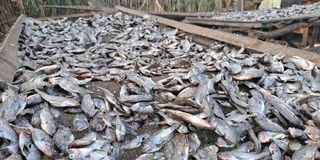
Fish from Lake Nakuru
The declaration came as Joho attended a youth and women empowerment funds drive in Nakuru, where leaders discussed expanding economic opportunities for the two groups.
In the event, Joho while speaking to residents gave an order to police not to arrest anyone fishing at the lake.
“...Waziri wa samaki ni nani? Amri iko wapi? Kuna Zaidi yangu hapa? Wewe polisi usijaribu kushika wananchi wa hapa wewe. Mimi ndio waziri wa samaki na nimesema watu wa Nakuru wavue samaki wao kwani iko nini...Kwanzia leo, nimepatia watu wa leseni waende wavue samaki wao...,” he said.
The event placed livelihoods and empowerment at the center of the gathering, with Joho emphasising the importance of creating opportunities for young people and women. But the proposed fishing opportunity comes amid unresolved questions about the safety of fish harvested from the lake.
A Kenya Fisheries Service report dated April 2026, found that the fish sampled from Lake Nakuru were not safe for human consumption.
The sampling exercise was conducted on April 6 after the Senate Standing Committee on National Security, Defence and Foreign Relations directed the service to investigate concerns about fish from the lake entering the market despite a fishing ban.
According to the report signed by Kenya Fisheries Service Director General Daisy Muriuki, eight samples were collected from four sampling points and tested for heavy metals, including lead, arsenic, cadmium and mercury.
The results showed that two samples recorded lead concentrations above the European Union's maximum residue limit of 0.3 milligrams per kilogram. One recorded 0.36mg/kg, while another had 0.74mg/kg.
The report also found cadmium in some samples, although the recorded concentrations did not exceed the specified limit of 0.05mg/kg. Arsenic levels were below 0.01mg/kg in all the samples tested.
Examination of the fish also revealed external flukes and zoonotic flukes, including Haplorchis and Centrocestus, which the report says can be transmitted to humans when fish is eaten raw or undercooked.
“The batch of fish sampled and tested is not safe for consumption,” the service concluded, warning that the parasite infestation could pose a threat to consumers.
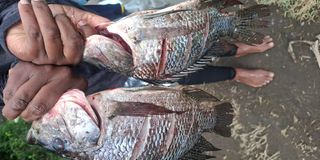
Fish from Lake Nakuru
The report recommended continued surveillance, identification of pollution sources and measures to protect public health. It reiterated that fishing in Lake Nakuru National Park is illegal and that fish harvested from the lake should not be consumed.
The government findings are consistent with concerns raised in a research paper published in August 2025 in the International Review of Hydrobiology.
In the study, titled From Saline to Freshwater: Ecological Shifts, Emerging Fisheries, and Health Risks in Lake Nakuru, researchers led by C.S. Nyamweya of the Kenya Marine and Fisheries Research Institute examined changes in the lake’s ecology and the emergence of an informal tilapia fishery.
The researchers found elevated concentrations of arsenic and lead in fish tissue, raising what they described as “critical public health concerns”.
The study also linked changes in the lake’s ecology to increased rainfall, catchment degradation and human activities, while noting that the emerging fishery was creating economic opportunities amid legal and environmental concerns.
It further warned that vulnerable groups, particularly women, faced heightened exposure to economic instability and health risks.
NACCSOF has called on the Cabinet Secretary and relevant agencies to publish the latest scientific findings, including laboratory results, sampling methods and the institutions responsible for testing. It also wants an independent, multi-agency assessment involving fisheries authorities, public health agencies, environmental regulators, researchers, fishermen and residents.