New dawn for farmers as county launches policy guidelines to promote sustainable farming practices

Nakuru County Deputy Governor David Kones and other stakeholders pose for a photo after the launch of the Nakuru County Agroecology Policy Launch on 9th December 2025. P

Nakuru county has officially launched its Agroecology Policy, a framework designed to transform farming practices by promoting sustainability, resilience, and inclusive food systems.
The policy seeks to guide farmers toward methods that restore the environment while ensuring safer, healthier, and traceable food for all.
According to Isaac Soita from Passion of Hope Kenya, the policy is particularly important for farmers because, for a long time, they have used inputs without fully understanding their contents or potential side effects.


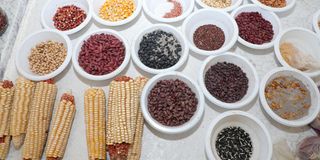
Indigenous seeds displayed at the Nakuru County Agroecology Policy Launch on 9th December 2025
He explains that, for instance, farmers commonly apply DAP fertiliser without knowing whether their soil actually needs DAP, NPK, or another type altogether, largely because they have not been testing their soils.
However, with the introduction of this policy, farmers will now be able to test their fields and determine the exact fertiliser needed. Additionally, the policy promotes the use of organic fertiliser, which is especially crucial for farmers who rely on harvesting directly from their fields.
Soita notes that this marks an essential first step toward healthier and more sustainable production.
Furthermore, he says the policy will assist the government in regulating agricultural inputs sold within the county. It will enable authorities to monitor the type of fertiliser used, how it is applied, and where the inputs originate, ultimately enhancing traceability.
As a result, poor-quality inputs can be easily identified, while the county government will also be able to standardise the quality of produce.
Consequently, linking farmers to markets will become much easier because buyers can trace produce back to its origin and understand its nutrient content.
This transparency reassures consumers, as they will know what food they are eating, how it was grown, who produced it, and where it comes from. According to Soita, these reforms represent a major milestone for the county.
Additionally, he points out that international markets, particularly in Europe, increasingly demand organically grown produce. Therefore, this policy will make it easier for farmers practising agroecology to access such markets.
By understanding the required standards and improving their practices accordingly, farmers will ultimately earn better returns for their work. In the long run, consumers will also benefit because reduced chemical use lowers the risk of harmful side effects, including cancers linked to banned pesticides.
Soita further notes that some chemicals banned in Europe are still being sold in Kenya, and the new policy will help curb such harmful imports. By doing so, it will protect both farmers and the environment from the long-term damage caused by toxic substances.
Similarly, Mary Ndungo from Naivasha, who has practised agroecology for seven years, says the policy will provide unified guidance and structured training for farmers across the county.
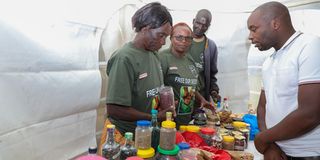
Mary Ndungo (center) together with other farmers at the exhibition stand during the Nakuru County Agroecology Policy Launch on December 9 2025
“This will also help farmers understand the interconnected crises of food insecurity, environmental degradation, climate vulnerability, and socio-economic inequalities across the county’s food systems,” she notes.
During the launch, Nakuru County Deputy Governor David Kones emphasized the county’s commitment to working with relevant stakeholders to ensure effective implementation of the policy.

Nakuru County Deputy Governor David Kones at the Nakuru County Agroecology Policy Launch on December 9 2025.
“This policy is not just another document to gather dust on shelves in our offices; it is a commitment to our future. A commitment to ensure that the way we farm, the way we produce food, and the way we nurture our land is sustainable, resilient, and equitable.,” he said.