Nakuru leads in community driven oversight
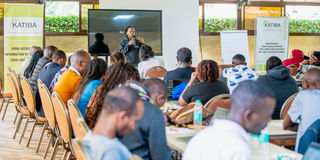
Patricia Joseph, head of programmes at Katiba Institute speaking during the joint reflection on access to information reflection meeting where she noted Nakuru , Nairobi and Samburu counties have greatly improved on access to information matters.

For years, residents seeking answers from government offices had often faced unanswered letters, and officials reluctant to disclose information regarding public projects and expenditure.
But in Nakuru, communities are increasingly demanding for transparency in their bid to exercise their right to access information.
Data recorded by Katiba institute in the three years on the Access to Information request indicated that a total of 44 letters were written by the three counties with Nakuru County leading with 18 ATIs followed closely by Samburu with 14 and Nairobi 12, with some of the letters being received and acted upon.

Patricia Joseph, head of programmes at Katiba Institute, says a three-year programme implemented in Nakuru, Nairobi and Samburu counties has helped communities, journalists, civil society organizations and county officials understand and use access to information to promote good governance and human rights.
The programme involved training communities on how to draft Access to information (ATIs) requests and use the responses to address issues affecting them.
Patricia says communities that initially had little knowledge of the ATIs that eventually began independently writing requests on issues ranging from stalled projects and healthcare to budgets, roads, garbage collection and public finance.
Patricia notes in Nakuru, one community, used the law to seek information about a stalled school project. After persistent requests and follow-ups, including involving the Commission on Administrative Justice, information about the project was eventually disclosed.
“Access to information is a right in itself. It is also an enabling right,” Patricia says, noting that meaningful public participation and accountability are difficult when citizens lack relevant information.
The programme has also seen changes within the county government.
Edward Gitau, Nakuru County Chief Officer for Public Participation and Citizen Engagement, says the partnership with Katiba Institute has helped the county expand access to information response.
He says the county website has been revamped and made more informative, while measures have been introduced to make information accessible to persons abled differently.
"The county has employed sign language interpreters for people with hearing impairments as more volunteers come in to support. Additionally, a budget is being set to translate service chatters in braille, video sign language and audio formats to accommodate persons abled differently within the county," Gitau noted.
In addition, he notes that Nakuru has also established a project management information system where details and costs of county projects can be accessed. Gitau says the county plans to increase the number of accesses to information officers across departments and establish an Ombudsman office to address cases where access to information is threatened.
Nakuru has also performed strongly in financial information disclosure, according to assessments cited by Katiba Institute.
Nakuru-based human rights activist Laban Omusundi said he has filed more than 15 access to information requests with the county executive and about 10 with the county assembly.

Nakuru-based human rights activist Laban Omusundi during joint reflection on access to information reflection after being engaged and trained by Katiba institute.
He says the assembly has generally been responsive, while the executive has been slower to respond.
“I can rate the executives lowly because they rarely respond to ATIs,” he said.
Omusundi says his experience with national institutions, including the Ethics and Anti-Corruption Commission, Parliament, Senate, Treasury and the Office of the Controller of Budget, has been more positive.