Where culture meets courage: Soila celebrates identity, dreams and women’s power to choose

Soila , a short film centers on 22-year-old Soila, a young woman determined to pursue a nursing career despite mounting pressure to marry 58-year-old Oletipis .

By the time the lights dimmed at Baraza Media Lab in Nakuru on August 21, the audience had already waited well beyond the advertised 6 pm start. The evening had been designed around culture as much as cinema, with the venue draped in vibrant Ankara fabrics and touches of Maasai-inspired fashion.
Guests were encouraged to dress with a Maasai touch, producing varied interpretations. Many women embraced the theme through elaborate beadwork, colorful jewelry and Maasai-inspired outfits, while several men loosely interpreted it by throwing Maasai shukas over ordinary clothing.
The choices raised questions about whether contemporary fashion has reduced an entire cultural identity to beads and the iconic shuka.

Ironically, Soila, which eventually began at about 8:13 pm, handles culture with considerably more depth.
Directed by Pauline Njoki and set in Bahati, the 15-minute short film follows 22-year-old Soila, played by Diana Gisoi, a young woman determined to pursue nursing despite pressure to marry 58-year-old Oletipis, played by Joseph Karanja.
Oletipis, a wealthy elder who has supported Soila's family since her father's death, wants her as his third wife.
The story opens with Oletipis urging Soila's mother, Naserian, played by Pamela Kenda, to accelerate bride-price preparations. His urgency unsettles Naserian, especially as Soila returns from town carrying a nursing scholarship letter. Soila has no intention of marrying Oletipis. Instead, she dreams of becoming a nurse and establishing mobile clinics so rural families do not experience the helplessness she associates with her father's death.
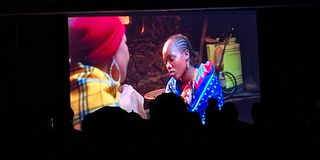
Part of the film with Soila's mother, Naserian, played by Pamela Kenda and 22-year-old Soila, played by Diana Giso.
Oletipis's generosity becomes complicated when he suggests that years of financial support have created an obligation. He believes his wealth, land and legacy must be preserved and that dying without an heir would leave his accumulation without purpose.
Naserian is equally layered, caught between protecting her daughter and confronting the consequences of decisions made when widowhood and survival left few alternatives.
The film's strongest element is its cultural authenticity. Dialogue flows naturally, mostly in Swahili, while the actors convincingly embody the rhythms, accents and mannerisms of the Maasai community. Their restrained performances make the tensions between Soila, Naserian and Oletipis feel grounded.
However, the film's ambition sometimes works against its short runtime. Soila attempts to address healthcare access, grief, education, family obligation, economic dependence, cultural expectations and women's autonomy within 15 minutes, leaving some themes only partially explored.
The circumstances surrounding Soila's father's death and the family's years of dependence on Oletipis remain largely implied.

Cast members featuring on Soila , a short film centers on 22-year-old Soila, a young woman determined to pursue a nursing career despite mounting pressure to marry 58-year-old Oletipis .
The ending is the film's boldest decision. After leaving home, Soila reaches the bus stage carrying her nursing letter and briefly imagines arriving in the city and beginning her desired life, only to be awakened from the dream by another passenger. Oletipis catches up with her, and the final confrontation sees the symbol of her aspirations destroyed before she is forced back into the life she sought to escape.
The abrupt ending denied audiences the satisfying resolution they expected. Some found Soila's fate frustrating, while others saw the unresolved conclusion as a reflection of the uncomfortable realities the film sought to portray. Discussions afterwards questioned whether the ending was deliberately powerful or simply left viewers wanting another chapter.
As a first showcase born from mentorship through the Ustadi Films Film Clinic Masterclass Bootcamp, Soila demonstrates an ambitious willingness to confront difficult conversations through film.