We do our best to raise children with cerebral palsy, but our government is failing us - Parents lament
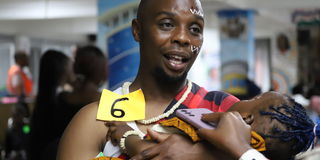
David Ng'ang'a, a teacher and father of six-year-old Ivana Wanjiku, calls for more investment by the government into medical support and care for children living with cerebral palsy

For Keziah Wanjiru, caring for her six-year-old son, Daniel Gathi, living with cerebral palsy and autism comes with a daily financial burden she can barely afford.
Her son uses about five diapers a day, costing Sh100, while his medication costs about Sh 8,000 a month. This is besides therapy, food and transport.
The mother of four, who left her job to become a full-time caregiver, says meeting the costs while caring for her other children has become increasingly difficult.

“I have to take him to therapy at least twice a week. It has been challenging because I am the primary caregiver and there are other children who need my attention,” she says.
Her son began experiencing convulsions shortly after birth and was admitted to hospital, where he remained on oxygen for about a month.
As he grew, the convulsions became more severe while his developmental milestones were delayed. At six, he did not speak or feed himself.
“When the time came for the child to sit, he would not sit down. When the time came for him to talk, he would not talk. Until now he is six years old and he does not talk,” she says.
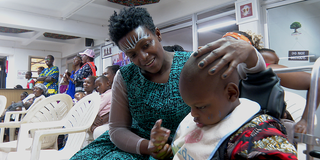
Keziah Wanjiru, the mother to six-year-old son , Daniel Gathi who is living with cerebral palsy during the world cerebral palsy day celebrations
She says she initially struggled to understand his condition, leaving her depressed and stressed.
“I did not know what disability was or what cerebral palsy was. It was my first time to see a child with convulsions,” she says.
Another family says acceptance and support have helped them navigate the challenges of raising a child with cerebral palsy.
David Ng'ang'a, a teacher and father of six-year-old Ivana Wanjiku, says his daughter developed cerebral palsy after complications at birth that resulted in a lack of oxygen.
His wife left her job as a secretary in Nairobi to become Ivana’s full-time caregiver.
Ng'ang'a says the family has chosen to view their daughter as a blessing rather than a burden.
“In our culture, we say children are a blessing. Ivana is not a burden to us. She is a blessing to us,” he says.
Ivana has made progress through therapy. Her father says she spent her first two years feeding through a straw but can now swallow food through her mouth.
However, she has a hip dislocation and requires specialised equipment that could improve her mobility.
Ng'ang'a is calling for more rehabilitation services at sub-county hospitals, saying existing facilities are overwhelmed by the number of children seeking therapy.
“When we go for therapy, the space is very limited. In 20 or 30 minutes, they have to move on to the next child. We need better facilities where children can get enough time and support,” he says.
He is also calling for interval care for caregivers who provide round-the-clock support.
“Caregivers are doing a full-time job, 24 hours a day. They do not have a day off. They also need time to breathe and recharge,” he says.
The families spoke during celebrations to mark World Cerebral Palsy Day at Baraza Media Lab in Nakuru.
Peris Wangare, founder of the Arthur for Others Organization, explains how government systems are failing parents of cerebral palsy children to the extent that they cannot get quality care.
“As a cerebral palsy community, we cannot entirely be recipients of care. We have to shape the care that we want to see and the change that we want to see in the community and in the system,” Wangare says.
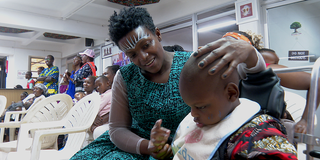
Peris Wangare, founder of the Arthur for Others Organization, advocating for more attention for children living with cerebral palsy and equipping of rehabilitation facilities
She says families face limited access to physiotherapy, expensive anticonvulsant medication and overcrowded rehabilitation facilities.
For Wangare, the advocacy is personal. Her son Arthur, who lived with cerebral palsy, died in 2023.
“I did not just wake up one day and say I want to work with this community. It is a story shaped by pain, hope and inspiration. This is why we are asking the community to hold space for us in society and for the government to invest in medical care and support for children living with this condition,” she says.
The families, however, say they need sustained support beyond the government annual celebrations, including affordable medication, accessible therapy, assistive devices and an inclusive society where children living with cerebral palsy can develop their abilities and live with dignity.
During the event, one child received a wheelchair valued at Sh 97,000.
According to the Nakuru county acting director Medical services Dr Kevin Awere eight facilities in the county can cater for the rehabilitation and care for persons living with cerebral palsy.
"Currently Nakuru County Referral and Teaching Hospital, Naivasha Sub -County Hospital (SCH), Gilgil SCH, Bahati SCH, Langalanga SCH, Molo SCH & Olenguruone SCH and Annex PGH provide rehabilitation care for living with cerebral palsy,"Awere notes.