Reproductive health advocates push for legal reform on SGBV-related pregnancies

Sexual Reproductive Health Advocate Joy Kamau notes inadequate resources in some public health facilities can limit womens' ability to provide comprehensive post-abortion care

Reproductive health advocacy groups have renewed calls for decriminalization of abortion resulting from Sexual Gender Based Violence to protect women and girls from risks of unsafe abortions.
Speaking during the marking International Safe Abortion Day 2026 the groups say criminalisation has not eliminated abortion but has instead made access to safe services more difficult for some women, particularly those living in rural and underserved areas.
The Reproductive Health Champions Organization (RHCO), Nakuru Reproductive Health Network (NRHN) and Hope in Life Society (HILS)

They are seeking reforms to laws and administrative procedures they say create barriers to abortion and post-abortion care, with particular concern for women and girls who have limited access to healthcare.
SRHR Executive Director Martin Lunalo says unsafe abortion remains a concern in maternal health, particularly among adolescents, women with disabilities, women in rural communities and survivors of sexual violence.
According to the Kenya Law Reform Commission Constitution of Kenya (Article 26), abortion is not allowed unless a trained health professional decides there is an emergency, the mother's life or health is in danger, or another written law permits it. Outside of these exceptions, the Kenyan Penal Code treats procuring or assisting an abortion as a felony carrying prison sentences
According to Lunalo, some women resort to dangerous methods before seeking professional medical assistance. Others later turn to abortion medication obtained from pharmacies and chemists, sometimes after complications have already developed.
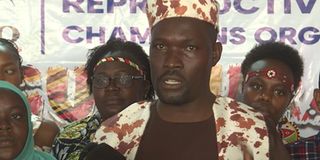
SRHR Executive Director Martin Lunalo during the interview says unsafe abortion remains a concern in maternal health, particularly among adolescents, women with disabilities, women in rural communities and survivors of sexual violence
He says the combination of unsafe practices and delayed access to appropriate care can increase the risk of complications.
The advocates referred to findings from a 2023 study by the African Population and Health Research Center, the Ministry of Health and the Guttmacher Institute, which estimated Kenya’s abortion rate at 53.3 per 1,000 women of reproductive age, up from 48.0 per 1,000 in 2012. The study also reported that more than 304,000 women sought post-abortion care in 2023.
Lunalo further raises concerns over differing interpretations of Article 26 of the Constitution, saying uncertainty about the law has contributed to hesitation among some healthcare providers to offer abortion services in circumstances where they are legally permitted.
HILS Programmes Coordinator Cosmas Mutua highlights women experiencing unintended pregnancies can find themselves with few options when legal restrictions, poverty and fear intersect.
He says the reality of unintended pregnancies should be considered when developing policies governing reproductive healthcare.

HILS Programmes Coordinator Cosmas Mutua highlights women experiencing unintended pregnancies can find themselves with few options when legal restrictions, poverty and fear intersect
Meanwhile, Joy Kamau calls for a review of abortion-related laws and policies alongside greater government investment in reproductive and maternal health services.
She notes inadequate resources in some public health facilities can limit womens' ability to provide comprehensive post-abortion care.
The organisations also called for wider access to accurate reproductive health information and public education, saying better awareness could help address misinformation and stigma surrounding abortion and reproductive healthcare.