Parkinsons Disease: How my life changed at 40
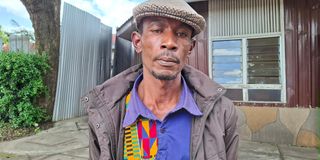

It is often said that life begins at 40, but for Stephen Mwaura, life seemed to stop - and start again on an entirely different, more difficult road.
At 43, Mwaura began noticing something unsettling in his daily routine, which started with his left hand shaking without warning, then the pain crept into his left leg alongside dizziness for months. He moved from hospital to hospital, searching for answers that never came.
“I did not know what was wrong with me,” he says, sitting with a quiet patience that belies the weight of what he carries. “I kept going to different hospitals, but I did not get help.”

It was not until a doctor from a medical camp finally gave him a name for his condition and told him that he had Parkinson's Disease (PD) and started medication, that a path would not be easy.
Mwaura says he has spent his life working with his hands - farming, carpentry, the kind of labor that asks everything of the body; however, PD reshaped it.
“I have good days and bad days, and on good days, I can still do some work, especially when I have taken my medication, which I require four of per day, is non-negotiable, and each tablet costs between Sh 60 and Sh 70,” the 47-year-old notes matter-of-factly, noting that on days he can’t afford them his symptoms progress.
While he has received help, the father of five says there is a heavy stigma associated with it.
“Some have accepted me, but others have not. Others still question whether what I experience is real, while some have resorted to calling me names, ' a drunk’, and assuming it’s witchcraft,” he says sadly.
With no definitive data in the country on PD, Mwaura's story is not unique, and thousands of people are navigating the same invisible maze, which is misunderstood, underserved, and often misdiagnosed.
The World Health Organization describes Parkinson's disease as a brain condition that causes problems with movement, mental health, sleep, pain, and other health issues. It is progressive - worsening over time, and while there is no cure, therapies and medicines can reduce symptoms.
The most recognised of these include tremors, painful muscle contractions, and difficulty speaking.
Observed annually on April 11, World Parkinson's Day exists precisely because the condition remains widely misunderstood, even as its reach grows.