Here are the misconceptions about Parkinsons Disease
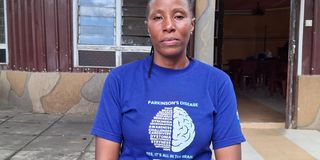

Miriam Muraya, the Nakuru County Coordinator for the Parkinson's Support Group of Kenya has revealed shat one of the most dangerous misconceptions about Parkinson's Disease is that it is simply a shaking condition but in reality, it is far more complex.
“Parkinson's has over 40 symptoms, which increases the chances of misdiagnosis, especially with other neurological conditions,” she says, adding that while awareness is still very low, education is essential.
Beyond the visible tremors in the hands and legs, the disease causes stiffness of movement, gait and balance problems, and freezing of movement. Less visible symptoms include loss of smell, anxiety, dizziness, and sleep disorders.

The condition progresses in stages - mild, moderate, and severe - but the trajectory is not uniform, and every warrior experiences it differently, Muraya notes.
Progression is shaped by access to medication, quality of medical care, and the strength of a patient's support system.
Parkinson's is also one of the fastest-growing neurological conditions globally, and it is frequently confused with dementia, stroke, and arthritis due to overlapping symptoms.
“These misconceptions contribute to stigma and delay proper diagnosis and treatment,” she says.
At the community level, the misunderstanding runs even deeper, with some attributing it to curses or referring to it as ‘chira.’ Muraya says others think patients are drug addicts, or assume they have had a stroke, which results in many patients suffering in silence, never seeking or never accessing the help they need.
The financial burden is also as relentless, Muraya notes.
“The first line of treatment is a drug called Sinemet, used to manage symptoms, and the dosage varies by patient, but a single tablet costs around Sh 70 in local pharmacies. For a patient taking four tablets a day, that amounts to roughly Sh 200 daily, which is a significant burden given the current economic situation,” Muraya opines.
Compounding the challenge is the inconsistent availability of Parkinson's medication in public health facilities.
“Parkinson's medication is not consistently listed among essential drugs in public pharmacies. This is an area that needs urgent attention,” Muraya notes, adding that therapy, which can slow the physical decline, remains similarly out of reach for many.
To curb this, she says, first, drugs must be made available, affordable, and accessible, followed by the expansion of neurological services.
“There should be neurologists available, at least in major hospitals, to ensure proper diagnosis and care,” she notes. Third, and perhaps most urgently, communities must be educated to replace judgment with understanding.
“Parkinson's affects not just the body, but also emotional and psychological well-being. Communities must understand the condition and offer support rather than stigma,” Muraya says.