Why Nakuru farmers are opting to expand potato production over other crops
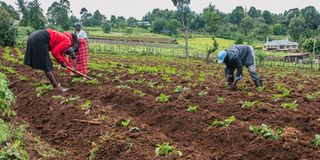
Farmers weeding for potatoes in Kuresoi South

Nakuru farmers are putting more land under potatoes because improved varieties, easier access to quality seed and training from Village-Based Advisors (VBAs) are increasing confidence in the crop, according to a midline evaluation of the FIPS Africa potato programme.
The assessment found that 81.7 per cent of supported farmers had expanded their potato acreage, while 91.6 per cent said potato farming had become more important to them.
The change reflects a shift in farmers’ production decisions as access to better planting material improves. The evaluation found that 73.8 per cent of supported farmers in Nakuru now source seed from VBAs and Decentralized Seed Multipliers (DSMs), compared with 3.4 per cent among comparison farmers.
Farmers are also moving away from recycled and neighbour-sourced seed. Before farmers depended heavily on informal sources, while the 2026 midline assessment found that 73.8 per cent of farmers in supported networks were sourcing seed through the local VBA/DSM system and 33.1 per cent were multiplying clean seed themselves.
The improved seed system has coincided with wider adoption of higher-performing varieties. Some 91.9 per cent of farmers in supported networks reported adopting improved varieties. The evaluation found that varietal choices are increasingly influenced by yield performance and market demand rather than simply what seed is available.
For farmers who had previously abandoned potatoes, the changes have helped restore confidence in the crop due to poor yields.
The transformation is also creating opportunities for local seed entrepreneurs. In Nakuru, 92.5 per cent of VBAs consider seed production more profitable, with an estimated gross margin of sh 552,000 per acre and a return on investment of more than 300 per cent. Some 97.5 per cent said they intend to continue producing seed.
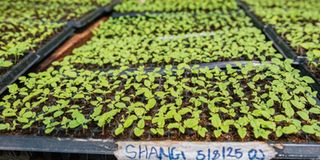
Shangi potato variety Apical Root Cuttings in a greenhouse.

The evaluation describes Nakuru as a “scaling system” in which the decentralized seed model is influencing production decisions, acreage allocation, varietal choice and commercialization behaviour.
The findings suggest that the increase in potato acreage is not simply a response to farmers having more land available. Rather, it is linked to growing confidence that potato production can deliver better returns when farmers have access to quality seed, improved varieties and local advisory support.