Farmers in Kuresoi count huge losses after prolonged dry spell destroys maize crop production
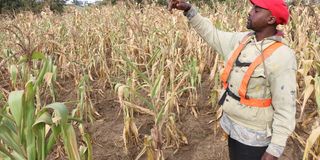
A maize farmer in Mirera, Naivasha sub county inspects his farm. He is among farmers in the Rift who have been affected by the drought causing their maize farms to dry up

Thomas Koech is not a happy farmer this season owing to the dry stalks of maize that began withering just as the crop reached a critical stage just two months ago.
The Kuresoi North farmer says the prolonged dry spell has destroyed nearly all of his three-acre maize crop, wiping out the harvest he had hoped would feed his family and generate income through the sale of green maize.
“I followed the advice from agricultural officers and applied fertilizer as recommended. I spent a lot of money on inputs because I expected a good harvest, but the crop still dried up,” he says.

Koech notes that he had expanded his farming operations this season after previously cultivating on a smaller scale, hoping the harvest would improve his family's income.
He says only one acre had been set aside for household consumption, while the remaining two acres were intended for sale as green maize to cover school fees and other household expenses.
“I had hoped to harvest enough for my family and also sell some to meet my children's school fees and other household needs. Now all those plans have been affected because the crop has dried up,” he notes.
Koech estimates he will lose about Sh 160,000, saying an acre of green maize currently fetches about Sh 80,000 and adds that the crop began to dry up just as it reached the tasseling stage.
His experience reflects what traders say is beginning to show in the market, with the price of a 90-kilogram bag of maize rising from about Sh 3,700 two weeks ago to around Sh 4,500, amid concerns that prolonged dry conditions have affected crop performance in parts of the country.
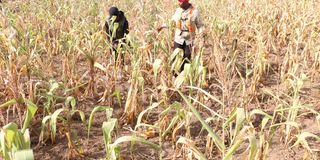
Maize farmers in Mirera, Naivasha sub county inspect their farm. They are among farmers in the Rift who have been affected by the drought causing their maize farms to dry up
Leah Wangari, another farmer from Murindoko in Kuresoi North, says she is also counting heavy losses after the prolonged dry spell destroyed much of her maize crop.
Wangari notes that she cultivates about three quarters of an acre of maize every season, investing close to Sh 20,000 in land preparation, seed, fertilizer and other farm inputs.
However, she says this season's crop has withered before maturity, leaving her unlikely to recover the money she invested.
The farmers' experiences come as the government moves to establish the extent of maize crop failure reported in parts of the North Rift in a bid to safeguard the country's food security and avert a possible shortage next year.
Principal Secretary for Agriculture Paul Ronoh says the Ministry is closely monitoring the performance of maize planted during the long rains between January and June after preliminary reports indicated poor performance in some areas.
Speaking during an engagement in Nakuru, Ronoh says the Ministry has deployed a team of scientists to determine the extent of the losses and recommend appropriate interventions.
Koech estimates he will lose about Sh 160,000, saying an acre of green maize currently fetches about Sh 80,000 and adds that the crop began to dry up just as it reached the tasseling stage.
“We have established that some of the maize crops have failed, especially in parts of North Rift. We have put together a team of scientists to determine the extent of failure so that the Ministry can come up with mitigation measures. Our priority is to ensure the country does not face hunger,” he says.
According to him the assessment report will determine whether local production will be sufficient to meet national demand. Should the report indicate a significant production deficit, the government will consider importing maize to bridge the supply gap and stabilize the country's food reserves.