Win for Nakuru county as court dismisses petition challenging rehabilitation of Lions Gardens
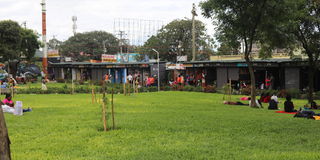
A section of the stalls at Lions garden in Nakuru city. Photo taken on May 14,2025.

Few disputes ignite public passion like those involving land, environment, and government power. In Nakuru, a battle over a modest but symbolically significant public park, popularly known as Lions Gardens found its way to the Environment and Land Court, pitting citizen activism against county planning authority.
At the heart of the case was a fundamental question: had Nakuru County Government unlawfully converted public land into commercial space under the guise of rehabilitation?
The consolidated petitions, brought by John Githanga and the Trusted Society of Human Rights Alliance, challenged the county’s decision to rehabilitate Lions Gardens by introducing structured stalls for small-scale traders.

The petitioners argued that the project amounted to land grabbing, violation of environmental rights, and a breach of constitutional principles, particularly public participation.
Lions Gardens, a 1.19-acre green space established in 1929 under the historic Bellenden Plan, sits strategically near Nakuru’s main bus terminus.
For decades, it has served as both a recreational park and an informal economic hub for photographers, shoe shiners, nail artists, and hawkers.
According to the petitioners, however, the county’s “rehabilitation” crossed a constitutional red line by transforming a public park into a commercial enterprise without lawful change of user, proper environmental impact assessment, or genuine public participation.
The county government defended the project vigorously. It told the court that the park had deteriorated into an eyesore plagued by insecurity and open defecation, undermining Nakuru’s status as a city.
The rehabilitation, funded through the Financing Locally Led Climate Action program (FLLoCA), was presented as a climate adaptation initiative aimed at restoring greenery, improving aesthetics, and formalizing existing livelihoods—not privatizing public land.
Central to the court’s analysis was whether public participation, a cornerstone of Kenya’s constitutional governance under Article 10, had been adequately conducted. The court reviewed evidence of stakeholder meetings held in August 2023 and April 2024, public notices issued before the park’s closure, and consultations involving traders, street families, ward officials, and county administrators.
In a detailed judgment, the court concluded that public participation was neither cosmetic nor illusory. While not every citizen was consulted, the process met constitutional thresholds of reasonableness, inclusivity, and transparency. Importantly, the court emphasized that public participation does not require unanimous approval, only a meaningful opportunity for affected persons to be heard.
On the controversial issue of commercial stalls, the court rejected the argument that the project amounted to an unlawful change of land use. It found that small-scale trading had always been part of the park’s social reality and that organizing such activities through regulated stalls did not convert the park from public to private land. No evidence, the judge noted, showed alienation, leasing, or transfer of ownership.
The court also dismissed claims that environmental rights under Articles 42, 69, and 70 of the Constitution had been violated. On the contrary, the rehabilitation project was framed as an environmental improvement, increasing urban greenery and contributing to climate resilience.
Perhaps the most striking paragraph of the judgment addressed resistance to change. The court observed that nostalgia for the “golden years” of Nakuru must be balanced against the realities of urban growth and climate change. Governance, the court implied, requires adaptation, not stagnation.
In the end, both petitions were dismissed, with no orders as to costs, recognizing the public interest nature of the litigation.