The moments that defined Nakuru in 2025
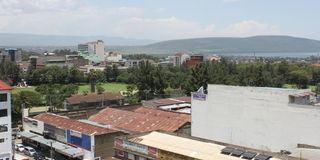
An ariel view of Nakuru city.

In Nakuru County, the year 2025 was marked by a series of unsettling public conversations that refused to fade away.
These moments drew national attention, provoked public outrage and exposed deep governance and social fractures, shaping both how residents experienced the year and how the county was discussed beyond its borders.
Controversy followed the appointment of Lee Kinyanjui as Cabinet Secretary for Trade, Industry and Investment (MITI) at the beginning of the year.


While this was celebrated by some as Nakuru's return to national executive power, it also highlighted the tension between Gen Z's calls for change during the June 2024 Maandamano movement, and the persistence of elite continuity in national leadership. It also reopened debates about political recycling.
In the county, discussion focused less on Lee himself and more on what his elevation symbolised in a county grappling with unemployment, stalled industries and unmet expectations from previous political alliances.
The county was also shaken this year by the brutal murder of activist Richard Raymond Otieno, popularly known as the 'Molo President', just days after he complained of being followed by unknown individuals and reported receiving threats.
Shortly afterwards, the county was gripped by the mysterious disappearance of Brian Odhiambo, a case which quickly became a rallying point for discussions about extrajudicial actions, enforced disappearances and the vulnerability of young men to state and non-state violence.
To date, public trust in investigative institutions has eroded as physical and online campaigns demanding accountability highlight a growing disconnect between official assurances and the lived reality of affected families. The case is still ongoing.
The sense of institutional failure deepened with the disturbing case of Baby Mercy, a nine-month-old baby whose body was reported missing from the Nakuru PGH morgue.
This shocking revelation raised questions about the dignity of the dead, record-keeping in public hospitals and the trauma inflicted on grieving families. The case is still ongoing in court.
While these issues were being discussed, Governor Susan Kihika largely withdrew from public life, prompting growing concern about her prolonged absence from the county.
This silence created a vacuum that was quickly filled by speculation, criticism and frustration from residents who felt abandoned during this period of heightened uncertainty.
This frustration reached a dramatic peak when Engineer Kimori wrote to United States President Donald Trump, urging him to deport Governor Kihika 'so that she could resume her duties'.
Shortly afterwards, public uproar ensued when the county government stated its intention to build affordable housing on the grounds of the Afraha Stadium in June.
Although the proposal was presented as part of a national housing agenda, it was widely criticised as an encroachment on one of Nakuru’s few remaining public recreational spaces.
Athletes, sports enthusiasts, activists and residents questioned the logic of sacrificing social infrastructure for housing, reigniting broader debates about urban planning, public participation and whose interests development truly serves.
The conversation took an even darker turn in August with the exposure of a child sex trafficking scandal in Mai Mahiu.
The revelations painted a grim picture of exploitation thriving in plain sight, enabled by poverty, weak child protection systems and community silence.
Tragedy struck again in August of the same year when eight Kenya Pipeline Company staff were killed after being hit by a train in Naivasha. Public sympathy was accompanied by urgent questions about rail safety, and how a routine commute could turn fatal.
The county had barely processed that loss when a devastating road accident in Gilgil claimed the lives of 16 family members in September.
This incident reignited long-standing concerns about road safety along the Nakuru–Eldoret highway, a notorious stretch of road for fatal crashes. Similar demands had been made after previous tragedies.
Amid these crises, Nakuru hosted a three-day presidential visit in October, an event marked by grand promises and choreographed public engagements.
The year ended with the President launching the Rironi–Mau Summit Road in November, a project that had been touted for years as a transformative infrastructure investment for the region.
For many, the road symbolises long-awaited relief from congestion and economic losses. However, even this moment of optimism was tempered by years of delayed projects and unfulfilled promises.
Together, these events forced residents to confront difficult questions about leadership, justice and safety.