Selective silence: Why Nakuru leaders must stop cherry-picking their response to security crises

Rev. Julias Ndumia was found murdered in Presbyterian Church of East Africa (PCEA) Tabuga Church in Lanet

The killing of PCEA pastor Reverend Julius Ndumia is now shaping public debate in Nakuru, with some residents pointing to what they perceive as double standards in how insecurity is addressed.
While leaders have called for swift investigations and justice, it could be argued that the intensity of those appeals appears linked to a supposed familiarity with the victim, raising questions about whether all cases receive equal attention.
Among the leaders who reacted to the clergyman’s killing include Governor Susan Kihika, Bahati MP Irene Njoki and her predecessor Kimani Ngunjiri.


Former Bahati Member of parliament Onesmus Gunjiri calls for police to collect and protect CCTV footage to ensure the culprits are arrested
The criticism reflects a broader frustration among sections of the public who say everyday incidents of crime rarely attract the same level of visibility or urgency. Across the county, muggings, violent attacks, and unexplained killings continue to be reported, often without sustained public statements or follow-up from leaders.
Mtaa Wangu, has since the year started documented close to 10 such violent crimes, with many more believed to go unreported, with national statistics further placing Nakuru among the country’s crime hotspots.
According to 2025 data from the Kenya National Bureau of Statistics (KNBS), Nakuru ranked fourth nationally in reported crime, recording between 4,600 and 5,400 cases in 2024.
The county has also featured among what was described as the ‘deadly five’ regions grappling with high murder rates and organized criminal activity.
Against this backdrop, critics insist the concern is not the condemnation of the pastor’s killing, but what appears to be inconsistency in response, and argue that calls for justice should not be influenced by a victim’s social standing or personal networks but applied uniformly.
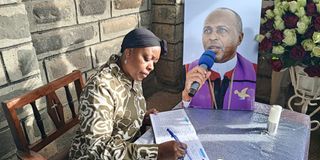
Bahati MP Irene Njoki signs condolence book at PCEA Tabuga parish as she joins family and friends to mourn the death of Rev. Julia Ndumia.
Analysts note that public statements by leaders play a key role in signaling accountability and prioritization. When responses appear uneven, they warn that these risks eroding public confidence in both leadership and security agencies.
As investigations into the pastor’s murder continue, residents are now calling on security agencies to match that urgency across the board by fast-tracking unresolved cases. They also want greater coordination within the justice system to ensure cases are concluded in a timely manner.
For many, the issue goes beyond a single incident, pointing instead to a deeper concern about equity in how justice and public attention are applied across Nakuru County.