Restoration of vegetation lost to Rironi–Mau Summit Road expansion project begins

The Rironi–Mau Summit Road project is combining environmental restoration, renewable energy and expanded road infrastructure as construction progresses along the key Nairobi–Nauru corridor.
The project is implementing a major tree-growing programme to restore vegetation cleared during construction, while plans are also underway to install approximately three million megawatts of solar power to support the highway’s operations.
According to the PS state department for roads Eng Joseph Mungai the project is not only sinking carbon but also elevating life. He noted that a key part of this vision is tree growing and carbon sequestration.
“Trees are natural carbon sinks. Through photosynthesis, they absorb carbon dioxide from the atmosphere and store carbon in their biomass and soils. Strategically growing and protecting trees along suitable sections of the corridor can therefore contribute to carbon sequestration, while reducing soil erosion and dust, supporting biodiversity, providing shade and improving the landscape,” his speech noted.

Additionally, he noted that, “Let us make the Rironi–Nakuru–Mau Summit Corridor a model of sustainable and climate-resilient road development in Kenya.”
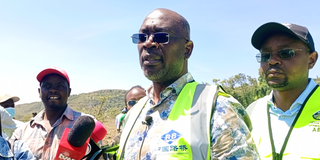
The Director of Public-Private Partnerships at the Kenya National Highways Authority (KeNHA), Eng. Charles Obuon, noted that the environmental impacts of construction are being addressed through the project’s Environmental and Social Management Plan.
“One of them is the cutting of trees. We are now working on restoring them,” Obuon said.
The tree-growing programme began with 20,000 seedlings planted in collaboration with partners including the National Youth Service and Kenya Prisons Service in Naivasha Prison. An initiative he said will continue along the road corridor as construction progresses.
“The restoration is intended to replace vegetation lost during road widening while supporting soil conservation, biodiversity and climate-change mitigation. We are also encouraging communities along the corridor to plant and protect trees in homes, farms, schools and other available spaces,” he advised.
Giving updates on the road status progress, Obuon said the project is currently focused largely on structures and earthworks, with overall progress slightly above 20 per cent. On the other hand, Yu noted Earthworks on the Rironi–Naivasha section is about 80 per cent complete, with pavement works expected to begin soon.
“As they start the pavement works, you will find it will pick up very fast. The early stages involve foundation and structural works that do not immediately translate into large visible sections of completed road. By December I am sure we will have made some good progress. We promised the president that by next year on Madarak Day you will be able to drive safely to Nakuru on this road,” Obuon said.
The director noted that the project includes interchanges at major junctions and expanded road sections intended to improve traffic flow and reduce congestion. With some sections having six lanes. The Official said the project is designed to reduce travel time, fuel consumption and vehicle operating costs while improving road safety.
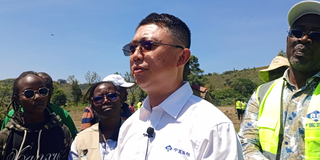
The Project Manager from Ririoni –Naivasha to Gilgil, Eric Yu confirmed that three million megawatts of solar panels will be installed to power facilities associated with the highway, including street lighting, tolling stations and the operation and maintenance center.