Report reveals how business activities in Mau Forest have infringed on Ogiek Community members rights
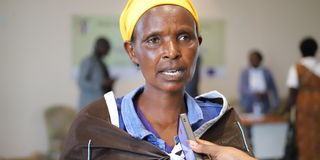
Cheuma Cheptoo during explains how the report will help the Ogiel community especially women and youth benefit from the Mau forest should recommendations in the “The Voice from the Land” report be honored by the government and investors

A newly launched report by the Kenya National Commission on Human Rights (KNCHR) has revealed how the indigenous community are marginalized by the business activities happening in their localities.
The report titled “The Voice from the Land” documents the experiences of indigenous communities across 13 counties and highlights how business activities and government actions have affected their rights.
For the Ogiek community in Mariashoni, the report has laid bare how the businesses set up in their community lands have not benefited the members

Stephen Lele, an Ogiek community member from Mariashoni, says the community has for years watched outsiders benefit from resources within the Mau Forest while locals remain sidelined.
“Sawmillers come into the forest to fell trees and bring labour from other communities, despite using our infrastructure like roads, the community hardly benefits from these businesses,” he says.
Lelei adds that the community is also waiting for the government to honour the landmark ruling by the African Court on Human and Peoples' Rights in Arusha, Tanzania regarding Ogiek land rights.
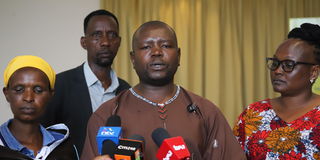
Stephen Lele during explains how the report will help the Ogiel community benefit from the Mau should recommendations in the “The Voice from the Land” report be honored by the government and investors
“In the landmark legal battle concerning the rights of the indigenous Ogiek community to their ancestral land in Kenya's Mau Forest, the court ruled that the Kenyan government violated several rights of the Ogiek, including rights to property, culture and non-discrimination. If the government honours this ruling, we will be able to negotiate better with investors and benefit from our lands,” Lele explains.
Another resident, Cheuma Chepto, notes that beyond being marginalized as an indigenous community, women and youth have also been excluded from decision-making on business and land matters.
“I am happy that the report will help amplify communities’ land rights and women’s involvement in these discussions. Before, women were not allowed to speak in men’s or elders’ meetings, but progressively we are being brought on board in business and land decision-making matters,” she says.
Speaking during the launch of the report in Nakuru, KNCHR chairperson Claris Ogangah says the public inquiry began in 2024 following numerous complaints from indigenous communities regarding the impact of business enterprises on their land and livelihoods.

KNCHR chairperson Claris Ogangah during an interview during the launch of “The Voice from the Land” report by the Kenya National Commission on Human Rights (KNCHR) in Nakuru on March 10,2026.
She explained that many indigenous communities depend on land for their survival, yet businesses also rely on the same land for investment, often creating conflicts when communities are not properly consulted.
"The commission visited 13 counties where indigenous communities reside and documented issues such as lack of consultation before businesses began operations, limited employment opportunities for local residents and barriers to land ownership,"Ogangah notes
Among the key recommendations in the report is the full implementation of the Community Land Act, which allows communities to register land collectively.
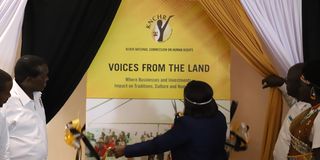
KNCHR chairperson Claris Ogangah launches the “The Voice from the Land” report by the Kenya National Commission on Human Rights (KNCHR) in Nakuru on March 10,2026
According to Ogangah, securing community land titles will enable indigenous groups to negotiate fairly with investors and ensure development projects respect their rights.
For the Ogiek community in Nakuru, the report signals a renewed push for recognition, justice and inclusion in decisions affecting the land they have protected for generations.