Public spending under scrutiny as Nakuru County opens 2026/27 Budget discussions
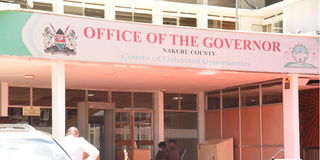
The office of the governor in Nakuru city.

As Nakuru County begins public participation gatherings to discuss its 2026/27 budget and Medium-Term Expenditure Framework residents are keen to understand how the funds allocated in the previous budget were utilized.
Led by good governance champion Laban Omusundi , the residents are seeking to have the county executive account for the funds allocated in the previous financial year before the new budget allocation is drafted.
“There is no value in making new allocations when the impact of previous budgets cannot be seen on the ground,” he says.

He notes that reports by the Controller of Budget and the Auditor-General have revealed troubling gaps between expenditure and service delivery. He says billions of shillings have been spent, yet residents continue to face poor roads, weak healthcare services, and inadequate infrastructure.
According to him public participation must go beyond attendance at hearings and extend to full disclosure of how funds were used, what challenges were faced, and why some projects failed.
“We cannot just plan a new budget without evaluating the previous one,” he says. “That disconnect is what keeps repeating the same failures.”
The discussions on the new budget and the medium-term expenditure framework aims at providing residents with an opportunity to influence how billions of shillings will be allocated in the coming financial year.
The hearings, scheduled to run from January 26 to 30 across Nakuru, Naivasha, Molo, and Gilgil, are meant to gather public views on sector priorities before the county treasury finalises its fiscal strategy paper.
Nakuru County's 2024/25 budget stands at approximately Sh 21 billion, with Sh 14 billion (66 percent) allocated to recurrent expenditure, including a wage bill of Sh 8.1 billion—39 percent of the budget, exceeding the legally required maximum of 35 percent.
Only Sh 7 billion (33.4 percent) has been earmarked for development projects, a ratio that has drawn criticism from civil society groups and fiscal watchdogs.
Omusundi however points out that the upcoming budget must prioritize emerging urban challenges, particularly within Nakuru’s Central Business District. He notes that drainage and sewerage systems, many of which were installed before independence, have failed to keep pace with urban growth.
“When it rains, even lightly, the town floods. That tells you how outdated the infrastructure is,” he says.
The governance expert also questions the continued funding of city upgrading projects without demonstrable results. He opines that allocating more money to the same programs without first accounting for previous spending amounts to fiscal negligence.
“We should even suspend some allocations until we know what the previous money achieved,” he says.
On healthcare, he says the county should allocate more funds to the Nakuru Level Five Hospital but insists that any additional funding must be tied to strict accountability. He notes that drug shortages and bed sharing persist despite significant allocations to the health sector.
“Building hospitals means nothing if there are no medicines and patients are still sharing beds,” he says.
He also raises concerns about insecurity in the Central Business District, saying business closures and the absence of functional CCTV systems point to systemic neglect.
He opines that security infrastructure, drainage, and functional healthcare services represent the kind of basic, high-impact investments the 2026/27 budget must prioritise.