Our hot kitchens keep destitute families away from streets - SCANN defends feeding initiative
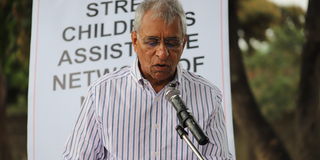
Street Children's Assistance Network (SCANN) chairman Shamsher Gilani addressed pupils, parents, teachers and different stakeholders at Muslim Primary

A Nakuru-based charity Street Children's Assistance Network (SCANN) has come out to defend its programs from allegations of contributing to the influx of street children in the city.
The organization maintains that its hot kitchens are aimed at keeping vulnerable children and families at home but not taking them to the streets.
SCANN chairman Shamsher Gilanis sought to set the record straight on what he termed to be misconceptions and misinformation being peddled by certain quarters regarding the relationship between its feeding initiatives and the increase in the number of street children within the city center.

“We are not responsible for bringing street children into Nakuru town. On the contrary, our focus is to ensure children do not leave their homes or drop out of schools due to lack of food and other basic needs,” states Gilani
The chair regrated that the misinformation has found its way to the county leadership which has seen it react strongly on the issue.
He revealed that he was invited to a county security meeting which had been convened to address the claims that the organisations programme was encouraging more children to move to the streets.
However, SCANN clarifies that its main feeding programmes are conducted within residential areas, in Ronda and Bondeni, where it operates two “hot kitchens” serving vulnerable families.
“We feed children from poor households within their communities. Without this support, many would be forced to go to the streets in search of food,” Shamsher explains.
The organization says it currently feeds an average of 1,450 people daily and has served over two million meals since its inception, all free of charge.
In addition, Shamsher says SCANN supports about 100 elderly and vulnerable individuals who gather outside its offices each morning. These include persons living with disabilities and those in need of medical assistance. The organization provides them with food, small stipends, and essential items such as medication and mobility equipment.
“We did not bring these people here. We found them in need and stepped in to support them so they can survive,” he says.
For years, SCAN has also operated a children’s rescue center, taking in destitute children found living on the streets. The organization reports rescuing over 500 children, with more than 300 supported through secondary education and several advancing to university.
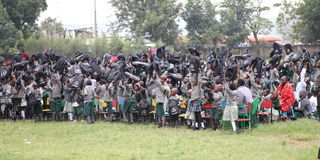
Muslim Primary school pupils show their school uniform and bags donated to the by SCANN organization at their school
However, in line with a national directive requiring the closure of children’s homes by 2032, SCAN is slowly phasing out the facility and shifting its focus to prevention.
“We are now working to stop children from going to the streets by supporting families, schools, and communities by providing food, learning materials to ensure more children remain home,” Shamsher says.
The organization has reduced the number of children under its care from 155 in 2022 to about 65 currently.
The Chairman also confirmed it is complying with county directives not to feed street children within the CBD, leaving that responsibility to the county government, which is planning to establish a rescue center in NJoro.
However, Shamsher warns that delays in setting up the facility could leave children vulnerable.
“If there is no alternative support, these children will be forced to find ways to survive, which could harm society,” he cautions.
Despite the challenges, SCAN reaffirmed its commitment to supporting vulnerable communities and keeping children in school and at home.