Nakuru maternal health experts urge regular antenatal visits to reduce childbirth complications
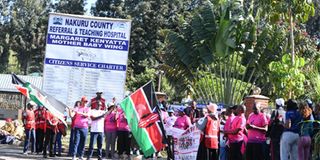
lag off of End Postpartum Haemorrhage Run at Nakuru County Referral and Teaching Hospital.

Regular antenatal visits can help identify and manage health complications during pregnancy, reducing the risk of severe complications during childbirth, including postpartum haemorrhage (PPH), one of the leading causes of maternal deaths.
This was the message at the End Postpartum Haemorrhage Run in Nakuru, which brought together health workers, midwives, students and members of the community to raise awareness about maternal health, blood donation and the importance of seeking antenatal care early.
Dr Mpoe Taraiya, a gynaecologist working at Molo Sub-County, emphasised that pregnant women need to attend antenatal clinics regularly to enable health workers to monitor their health, identify potential complications and prepare for safe delivery.

He particularly highlights the importance of monitoring blood pressure during pregnancy, noting that conditions such as severe hypertension and pre-eclampsia require timely detection and management to reduce the risk of complications.
"The first thing we have to do when a mother comes to the clinic is to check her blood pressure and make sure she is stable," Dr Taraiya says.
He urges women and their families to seek medical attention early rather than waiting until labour begins, adding that regular antenatal visits provide an opportunity to assess the mother's health and plan for potential emergencies.
Dr Taraiya also explains that when a mother experiences heavy bleeding after delivery, health workers have several interventions available depending on the cause and severity of the bleeding.
These include medicines that help the uterus contract, procedures such as balloon tamponade and, when necessary, surgery and blood transfusion.
"For local health facilities, however, access to adequate blood supplies remains an important part of emergency care that's why this exercise is very important," he notes.
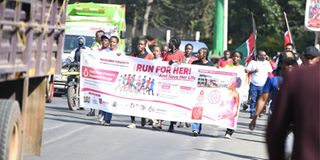
Attendees of End Postpartum Haemorrhage Run at Gateiguru
Celestine Wangari, a student who participated in the event and donated blood, called on Nakuru residents to become regular blood donors, noting that donated blood can help save the life of a mother experiencing severe bleeding.
“Donating blood will help a mum and save a life and that's why I decided to donate blood today,” she says.
Midwife Sylvia Nthiga, who works at Annex, says health workers often face challenges when emergency blood is not immediately available. She explains that midwives assess pregnant women, establish their blood groups and prepare for possible transfusions when a mother is considered at risk.
Nthiga also stresses the importance of starting antenatal care early, noting that anaemia detected during pregnancy should be treated before delivery because mothers with low haemoglobin levels may be less able to cope with blood loss.
She further raises concern about teenage pregnancies and the stigma that can prevent young mothers from seeking antenatal services, adding that youth-friendly clinics can provide a welcoming environment where young mothers can access care without fear of judgement.
" The facilities will provide a welcoming environment where young mothers can access essential antenatal services without fear of judgment," she says.
The message from the Nakuru run extended beyond the event itself, highlighting the role of communities in preventing maternal deaths by encouraging women to attend antenatal clinics, supporting blood donation and ensuring mothers receive skilled care during childbirth.
For families across Nakuru, the call is to seek antenatal care early, attend scheduled clinic visits, address health concerns during pregnancy and support blood donation efforts to help ensure that mothers who experience emergencies can access lifesaving care.