Nakuru leaders, peace actors sound alarm over recent ethnic tensions in Njoro, Molo

Leaders led by Nakuru county Governor Susan Kihika hold hands to symbolize peace as they celebrate International Day for Peace celebrations held at Nyayo gardens on 21 September,2026.

For those who lived through Kenya's darkest moments of political violence, the warning is familiar: conflict does not begin with a burning house or a body lying on the street. It starts much earlier, with words, suspicion, ethnic divisions and young people being convinced that their neighbor is their enemy.
That was the powerful message in Nakuru as the county marked the International Day of Peace, with speakers turning attention to growing ethnic tensions in Molo and Njoro and warning that the country cannot afford to repeat the mistakes of 2002 and 2007.
The celebrations came against a backdrop of concern over tensions in the two sub-counties, areas that have experienced ethnic conflict in the past.

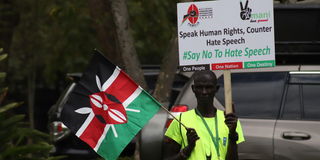
A Nakuru resident holds a peace message pluck card during the International Day for Peace celebrations held at Nyayo gardens on 21 September,2026.
Nakuru Governor Susan Kihika challenged residents to confront the danger before it escalates, warning that political competition ahead of the 2027 General Election must not become a source of ethnic hostility.
“Tribalism does not begin with a stone, it begins with a word,” Governor Kihika said.
Governor Kihika raised concerns over the recent tension in Njoro factoring in that Molo and Njoro, are where memories of previous conflicts remain part of the community's history.
Josephine Onunga, Secretary of the National Steering Committee on Peace Building and Conflict Management, recalled the violence that followed the 2007 election, describing Nakuru as one of the areas that faced a serious crisis.
“2007 was the worst time we ever had,” she recalled.
Onunga also urged Kenyans to look beyond 2007 and reflect on the warning signs that existed before the violence.
“Let us think about the journey we have travelled, urging communities to examine where they are, where they have come from and whether they are walking in the right direction,” she said.
This year's theme, “Investing in Peace”, was used to emphasize that peace requires deliberate investment in good governance, accountable leadership, education, employment and meaningful opportunities for young people.
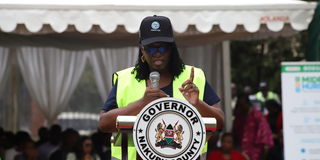
Josephine Onunga, Secretary of the National Steering Committee on Peace Building and Conflict Management, calls for peace during the International Day for Peace celebrations held at Nyayo gardens on 21 September,2026
Onunga stressed the importance of effective early warning and early response systems so that signs of conflict can be identified and addressed before they become violence.
In his speech the Chairperson of the National Cohesion and Integration Commission (NCIC), Bishop Dr Kepha Nyamweya Omae noted that, NCIC has continued to invest in strengthening inter-community and intra-community dialogues.
“This creates space for communities to discuss the issues that affect them openly and peacefully. In doing so, local grievances are prevented from being exploited as political weapons. Our experience shows that peace is closely tied to fairness and inclusion. Kenyans need to see that public resources are distributed fairly and that opportunities are not reserved for particular communities,” he noted
And as tensions emerge in Molo and Njoro, peace actors are urging communities to recognize that warning early, before words become stones, stones become violence, and political rivalry becomes another generation's trauma.