Nakuru county bleeds Sh 1.3 billion in corruption and stalled projects
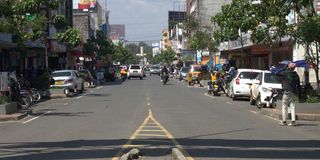
A section of Nakuru's Kenyatta Avenue.

What you need to know:
Among the cases highlighted is the controversial Kiratina Market tender scandal in which a Sh 7.9 million tender was allegedly inflated to Sh 10 million before being awarded to a politically connected contractor.
Residents of Nakuru may have lost more than Sh 1.3 billion to corruption, stalled projects, unsupported expenditures, and procurement irregularities between 2016 and 2024, according to findings compiled by investigative platform Africa Uncensored through its “Wizileaks” county corruption tracker.
The findings, drawn from Auditor General reports, Ethics and Anti-Corruption Commission investigations, and credible media reports, paint a picture of a county plagued by procurement fraud, land grabbing, ghost projects, and weak oversight systems that have persisted across successive administrations.
According to the report, Nakuru lost an estimated Sh18 million during the first administration of former governor Kinuthia Mbugua between 2017 and 2018.

Under the immediate former governor Lee Kinyanjui, the estimated losses rose sharply to Sh 801 million between 2018 and 2022.
The current administration led by Governor Susan Kihika has so far recorded an estimated 481 million in questionable expenditures and stalled projects since 2022, according to the database.
Among the cases highlighted is the controversial Kiratina Market tender scandal in which a Sh 7.9 million tender was allegedly inflated to Sh 10 million before being awarded to a politically connected contractor.
Investigators claim procurement laws were bypassed, evaluation documents falsified and supervision deliberately ignored, resulting in only one market shed being constructed before it collapsed ahead of handover.
The report also flags the long-running KALRO land scandal in Naivasha, where more than 3,000 acres of public land earmarked for agricultural research were allegedly grabbed through fraudulent title transfers involving private developers and public officials.
Infrastructure projects have equally come under scrutiny, with the Sh 124 million Keringet Stadium project cited as an example of stalled development. Although county officials reportedly stated that phase one of the project was 95 percent complete by 2024, construction has dragged on for more than four years without completion.
Auditor General reports between 2016 and 2024 further reveal widespread financial management gaps within the county government, including unsupported expenditures, unreconciled payroll variances, undisclosed bank balances, and billions of shillings in unused donor funds.
The report states that at least Sh 184.9 million was paid into 25 county projects that stalled before completion, denying residents the intended public services and value for money.
Investigators argue that while Nakuru has changed leadership over the years, corruption networks within procurement, land administration, and public finance management have remained deeply entrenched.
“The buck stops with the governors, but the rot runs deeper,” the report notes, arguing that successive administrations have failed to dismantle corruption systems that continue to drain public resources.