Nakuru clinical officers lament facing sacking threats for participating in nationwide strike
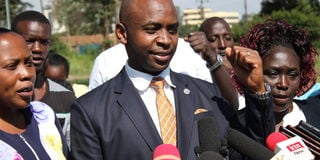

Clinical officers in Nakuru County have complained of facing coercion and intimidation from their bosses for participating in their nationwide strike which has entered its 24th day,
Seprine Kerubo, Chairperson of the Kenya Union of Clinical Officers, Nakuru Branch, confirms that permanent and pensionable staff have downed their tools while contracted clinicians are being forced to work under threat of non-renewal of their contracts.
"The services are being offered in casualty and outpatient by the contracted staff, however, those on permanent and pensionable are not at working," she says.

She confirms that contracted clinicians are being threatened with the termination of their contracts.
“It's like the management told them that if you are on contract, you are not supposed to be on strike, and they were worried that their contract could not be renewed. They were just being coerced and intimidated,” she says.
The county has approximately 165 permanent and pensionable clinical officers, most of whom are off duty due to the strike. However, Kerubo notes that a few critical staff, particularly anesthetists in the theater, have remained on duty.
She notes that healthcare facilities across the county are operating on skeleton staff, with most peripheral health facilities, including those in Kuresoi, Molo, and Elburgon, having closed their night shifts entirely.
“Most of the facilities are just doing day shift, but there are no staff on night duty,” she opines, adding that in some facilities, only one contracted staff member is handling day duties.
The situation has forced hospitals to rely heavily on medical interns who are working without supervision. She confirms that at the Provincial General Hospital, interns are running outpatient clinics independently, raising concerns about patient safety.
“The interns are on duty, and they are managing those patients. They don't have any supervisors there. Some cases have been missed, or there is some misdiagnosis,” Kerubo notes.
Critical services, according to Kerubo have been severely affected, particularly routine outpatient care, HIV treatment programs, and special clinics. She explains that clinical officers are typically the first point of contact for patients in outpatient departments, and their absence has created significant gaps in service delivery.
The few contracted clinicians who remain on duty are experiencing severe burnout from managing overwhelming patient queues. Kerubo says this has led to delays in management and potential misdiagnoses, as exhausted healthcare workers struggle to maintain the quality of care.
“When they are getting those burnouts, there is a risk of misdiagnosis and delays in management because you cannot see patients the whole day,” she observes.
The strike centers on the implementation of the Collective Bargaining Agreement, which Kerubo says has been delayed by the Ministry of Health despite the negotiations being concluded. She notes that discussions with County Executive Committee members, chief officers, and the governor have yielded promises but no concrete action.
In response however, Nakuru Teaching & Referral Hospital Medical Superintendent Dr James Waweru has denied the allegations saying there has been no impact of the strike to the hospital.
"We have 45 clinicians, both on contract and PNP, and only three or four are on strike, hence there is no impact of the strike to the hospital. Clinicians run the outpatient and theatres, and we don't usually have interns there, so the hospital is running at full capacity," says Dr. Waweru.
CECM Health Roselyn Mungai acknowledges that the strike is in force. However, clinical officers are providing services to citizens out of their own volition.
She however shifts the blame to the union officials who she accuses of threatening members who have chosen to report to work.