Lack of enough public dustbins highlights growing waste disposal challenge in Nakuru
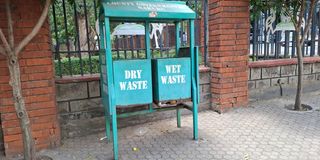

Public dustbins missing from parts of Nakuru city have left residents and pedestrians with fewer options for disposing of their waste, with the county government citing competing demands on its budget as it seeks alternative ways to provide the facilities.
An observation by Mtaa Wangu found gaps in the availability of public dustbins, raising questions about waste disposal in busy public spaces and the county’s plans to restore the facilities.
Some bins were removed during this year’s anti-government demonstrations and have yet to be replaced. The availability of funds for the facilities has also been affected by competing demands on the county’s budget.

County Executive Committee Member for Water, Energy and Environment, Natural Resources and Climate Change Roselyn Mungai told Mtaa Wangu that funds for dustbins came from recurrent expenditure but had been absorbed by increased demand for fuel for garbage trucks.
“The budget comes out of the recurrent lines, but they’ve been swallowed by the increased demand for fuel for the garbage trucks,” she said.
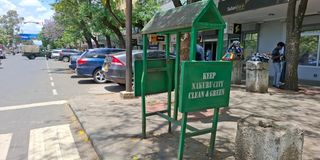
Mungai said the department was seeking to mobilize resources from private sector actors to help provide bins for public spaces.
She also encouraged businesses to embrace the reduce, reuse and recycle approach by converting suitable containers into waste bins and placing them outside their premises.
“If every business converts containers into bins outside their premises, that’s a problem halved. Others could donate to the parks and common areas like bus parks,” she said.
Mungai cited Nyayo Gardens and the Lions Gardens, which she said she had visited on Wednesday, as examples of public spaces that could remain clean when people took collective responsibility for waste disposal.
“There was no litter. It can be done if everyone participates,” she said.
The county’s plans to provide public dustbins are reflected in its budget documents, although the status of implementation remains unclear.
The county’s Annual Development Plan for FY 2026/27 lists Sh3 million for the purchase of 20 litter bins under its Environmental Management programme.
Separately, Nakuru City’s Integrated Development Plan for 2024–2028 sets a target of 20 litter bins at an indicative cost of Sh1.5 million in FY 2024/25, followed by 10 bins at Sh350,000 in each of FY 2025/26 and FY 2026/27.
The city plan’s listed targets amount to 40 bins at an indicative cost of Sh2.2 million over the three financial years. However, the planning documents do not establish how many bins were actually purchased and installed.
The difference between the allocations also raises questions about how the city’s planned expenditure relates to the county’s wider environmental management programme and how much funding is available for purchasing and maintaining public bins.
Mungai said the provision and maintenance of public dustbins was a collaborative effort between the City Management and the Department of Environment. The county has yet to establish publicly, through the planning documents reviewed, how many of the targeted bins have been purchased and installed.