El Niño rains: Nakuru vendors put on alert over food contamination
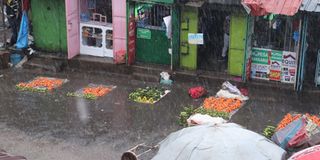
Vegetables and fruit sit on sheets on the wet ground as rain falls on a street off Mosque Road (also referred to as Mosque Lane) opposite Wakulima/ Gikomba markets in 2024.

Nakuru's food vendors, households as well as those in estates across have been advised to prepare now for expected El Niño rains, warning of a sharp rise in food-borne illnesses.
The State Department for Public Health and Professional Standards has advised food businesses to prepare for flooding, high humidity and possible power disruptions that could compromise food safety.
In an advisory dated 28 September, the State department expects flood water to mix with sewage and contaminate shallow wells, boreholes and piped water, especially in low-lying areas.
It says high humidity will cause rapid mold growth on maize, peanuts and animal feeds, leading to aflatoxin contamination. It also expects power outages to spoil milk, meat and leftovers stored in fridges and freezers, and major markets to flood, exposing food to dirty water, mud and flies.
Additionally, it says past El Niño seasons have shown that heavy rains, flooding and high humidity lead to a sharp rise in illnesses such as cholera, typhoid and aflatoxin poisoning.
Nakuru has a large population of people involved in food handling.
County records show that 28,388 food handlers were certified and 8,900 food premises inspected and licensed in the 2024/25 financial year. The county also collected 290 food and water samples, with 90.8 per cent found to comply with safety standards.
The county has previously trained food business operators and vegetable vendors on food safety, with 1,213 operators reached through training cascaded by public health officers.
But the coming rains present additional challenges, particularly for traders operating in open-air markets and roadside stalls where food may be exposed to floodwater, mud and flies.
For food vendors and small businesses, the government has recommended keeping food off the ground and covered, ensuring proper drainage around stalls and keeping food handlers’ medical certificates up to date. County governments have also been directed to increase food safety inspections during the rainy period.
The Ministry has urged vendors to plan for drainage around their businesses and protect food from contaminated water.
Households have also been advised to clean and cover water storage tanks and jerry cans, keep drinking water in separate clean containers and have chlorine tablets or other approved water-treatment supplies available.
Those storing maize, maize flour, beans and groundnuts have been advised to ensure the food is completely dry and stored off the floor in airtight containers. People with cereals from the previous season have also been advised to sun-dry them before the rains begin.
The advisory further warns that power interruptions during heavy rains could disrupt refrigeration and cause milk, meat and leftovers to spoil.
The county in September pinpointed over 70 flood-risk zones as it ramps up disaster readiness before rains expected in October as part of its response to the anticipated rains. The county said it was prioritizing unclogging drainage systems, particularly in urban centers, to reduce flooding.