Court ban on politicians’ branding of public projects echoes Nakuru activist’s concerns
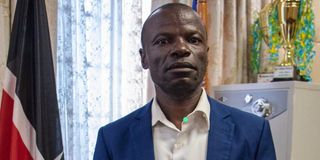
A photo of Nakuru-based human rights activist Laban Omusundi.

It is not uncommon to come across public facilities bearing the names or photographs of sitting political leaders as you walk around Nakuru and its environs.
Now, Nakuru’s sitting and elected leaders face renewed questions over the use of their names and images on publicly funded projects and county vehicles following a High Court ruling that declared personal branding of taxpayer-funded developments unconstitutional.
The ruling comes more than a year after Nakuru governance activist Laban Omusundi petitioned the Senate to stop governors and Members of County Assemblies (MCAs) from placing their portraits and names on projects financed using public money.

The practice has featured in Omusundi’s petition as a national concern, with politicians associating themselves with developments funded through taxpayers’ money, including roads, public facilities and other community projects.
In Nakuru, where successive county administrations have undertaken projects ranging from markets and sports facilities to roads and health infrastructure, the ruling raises questions about how public developments are presented to residents and whether elected leaders are taking personal credit for government-funded work.
The concern is in the placement of individual politicians’ names, portraits and political slogans on public assets, which can make developments funded by taxpayers appear to be personal gifts from elected leaders.
A High Court in Kajiado ruled on October 27 that personal branding of publicly funded projects violates constitutional principles governing the use of public resources. It ordered the removal of personal name branding from affected developments in Kajiado North.
The case was filed by one Shadrack Wambui against Kajiado North MP Onesmus Ngogoyo over the use of the legislator’s name, image and political slogans on publicly funded infrastructure.
The court, however, found that the petitioner had not proved that Ngogoyo personally, or through his agents, authorised the disputed signage.
Although the orders relate to projects in Kajiado North, the ruling has brought renewed attention to similar branding practices across the country.
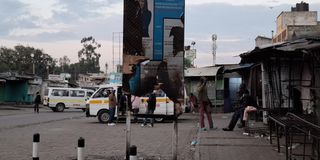
A half-burnt sign board bearing Susan Kihika's image at the Nakuru City Stage.
In July 2024, Omusundi asked the Senate to amend the County Governments Act to prevent governors and MCAs from using their names and images on publicly funded projects.
He proposed that public projects be identified as funded by Kenyan taxpayers and that county vehicles carry national flag colors to make them identifiable without using politicians’ personal branding.
Mtaa Wangu previously reported on Omusundi’s petition, which argued that the practice could mislead residents into believing elected leaders had personally financed projects that were paid for through public resources.
The Senate received the petition on September 2, 2024, before it was presented in the House on October 9 and referred to the Committee on Devolution and Intergovernmental Relations.
The committee subsequently recommended action against the practice, including investigations and audits by the Ethics and Anti-Corruption Commission, the Auditor-General and the Controller of Budget.
The court ruling has now reinforced the question raised in Omusundi’s petition: public projects are funded by taxpayers, and their presentation should not suggest that individual politicians own or personally financed them.