Commuters’ nightmare as Nakuru city roads crumble with potholes and ugly patches
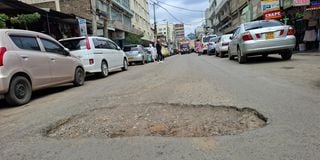
Pothole along Kenyatta Lane

The poor state of road network within Nakuru city is becoming a nightmare for motorists and pedestrians who are left to contend with potholes and ugly patches
Large sections of the city's road network have continued to deteriorate raising serious public concerns over the city’s development priorities
When the rains arrive, those same roads transform into something far more treacherous — waterlogged, murky, and impassable in places.

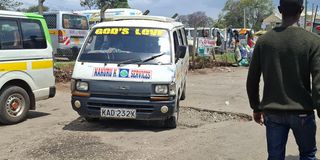
The situation mirrors a sentiment shared by Willie Oeba on a recent tweet, bluntly saying that ‘every time it rains, Nairobi morphs from one giant dumping site into a full swimming pool. From Singapore to Sink Hapo’.
Impromptu rains experienced this season continue to expose the fragility of the city's drainage infrastructure, with floodwaters quickly overwhelming roads and rendering some routes nearly impassable for hours, and it is only a matter of time before it starts spilling into business premises.
For pedestrians, bodaboda riders, matatu operators, and ordinary motorists, the recurring ordeal raises a persistent question - where does the money go?
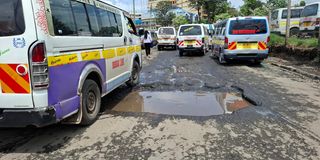
PSVS navigate potholes along Sation Road
According to the county's Approved Budget Estimates for FY2025/2026 to 2027/2028 (Medium Term Expenditure Framework (MTEF) 2025/2026 to 2027/2028), Nakuru City has been allocated Sh 497,561,244 in development expenditure for the Financial Year 2025/2026, with an additional Sh 48,927,956 set aside for operations and maintenance.
Against that allocation, the department's own budget estimates outline modest targets for the construction of 3 kilometers of roads within the city's boundaries, 6 kilometers of Non-Motorized Transport infrastructure, and 4.5 kilometers of stormwater drains.
For a city that swells with traffic daily and whose drainage gaps are exposed with every passing shower, one could argue the planned outputs fall painfully short of the problem's scale.
Potholes, in particular, that had gone unattended through the long dry season continue to be a daily menace for motorists who dodge and curse at them, and the rains have only made things worse, filling those craters with murky water, masking their depth and turning an inconvenience into a genuine hazard.
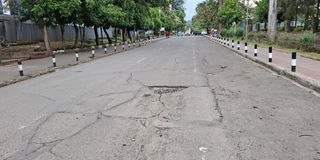
Pothole along Moi Road
drainage also remains the most visible gap, and without adequate channels to carry runoff away from roads and residential areas, even moderate rainfall is enough to cause flooding that lingers for hours, eroding road surfaces and compounding the damage that comes dry season after dry season.
City residents would agree that they simply want to see the budget translate into visible, lasting change on the ground. Smoother roads. Drains that actually drain. A city that, when the skies open up, does not sink.