Another dam, familiar questions: Will Mengit dam rehabilitation finally deliver water to Nakuru residents?

People wash their hands under running water at the school's taps in May, 2026

Nakuru residents have been promised more water after the Government launched the rehabilitation and expansion of Mengit Dam in Kuresoi North, adding to a string of major water projects that have been touted as solutions to the county's perennial shortages.
The project will increase the dam's storage capacity from 150,000 cubic meters to 400,000 cubic meters and provide water for irrigation on 600 acres, with about 1,000 households expected to benefit.
But the latest project comes as Nakuru waits for the benefits of other major water schemes announced over the years, including the Sh3.6 billion Chemususu Water Supply Project and the stalled Itare Dam.

The question for residents is whether Mengit will be different: when will the water promised on project plans and at launch ceremonies actually reach homes and farms?
Mengit Dam is being rehabilitated and expanded under a project that will also involve construction of a water reticulation system for irrigation.
The Government says the expanded facility will support high-value crops, integrated crop and livestock farming and drip-irrigated kitchen gardens in schools.
This latest promise comes against a backdrop of unfinished and long-awaited water infrastructure.
Itare Dam in Kuresoi North was conceived as one of the county's biggest answers to its water shortage, with the project designed to provide 100,000 cubic meters of treated water daily and serve about 800,000 people in Nakuru City, Molo, Njoro, Kuresoi and Rongai.
However, the project stalled before completion.
Nakuru County's 2025/26 budget implementation review reported no achievement on the planned Itare Dam water supply project during the first half of the financial year, with resource mobilization at the national level still ongoing.
The county expects the project, once completed, to provide 105,000 cubic meters of potable water daily and benefit over 220,000 households.
The Central Rift Valley Water Works Development Agency says the Itare project is on a resumption roadmap following the resolution of disputes and a settlement agreement.
Then there is Chemususu Dam, estimated at Sh 5 billion and 5.5 billion, which sits across the county border in Baringo but is also part of Nakuru's plans for increasing water supply.
The dam has a storage capacity of 12 million cubic meters and can yield 35,000 cubic meters of water daily.
The Government had said Nakuru will receive six million liters of water a day from the Chemususu scheme, with more than 5,000 households targeted for connections.
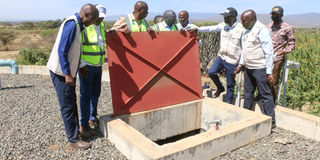
Water CS Eric Mugaa Julius Korir, inspects Chemususu water supply project in Mogotio, Baringo County in February, 2026.
The project’s second phase is also expected to attract an investment of upwards of Sh4 billion, with last-mile connectivity works already tendered for parts of Nakuru.
Yet the significance of these projects for residents is ultimately measured not by their storage capacities or launch ceremonies, but by how much water reaches households.
Nakuru remains a water-deficient county, with county planning documents putting the county’s daily water demand at about 89,000 cubic meters against organized supply of 47,500 cubic meters, leaving a deficit of more than 40,000 cubic meters a day.
The documents also identify ageing infrastructure, inadequate investment, water losses and high levels of non-revenue water among the challenges affecting supply.
Mengit now adds another set of figures to the county's water story which begs the question; when will those figures translate into water flowing from their taps and onto their farms?