Alarm as fishermen report four more hippo deaths, KWS confirms one carcass at Lake Naivasha
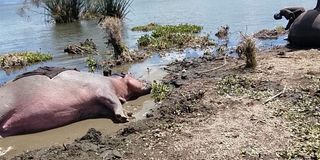
A photo of two hippos lying lifeless at the shores of Lake Naivasha at Kamere Beach on October 27,2026 after residents found them unresponsive

The Kenya Wildlife Service has disputed reports of four additional hippo deaths at Lake Naivasha, maintaining that its officers have so far established one carcass sighting even as local fishermen insist four more animals have died.
The conflicting accounts come amid growing concern over hippo deaths at the lake, with six animals reportedly dying within two weeks, according to local fishermen and the Beach Management Unit (BMU).
The latest incident involved four hippo carcasses reportedly spotted floating in different sections of the lake on November 12 by fishermen, raising concerns over a possible wildlife threat.

Laban Ewoi, a member of Kamere Beach Management Unit (BMU), says he spotted the animals while heading to work and immediately informed KWS officers.
Speaking to Mtaa, Ewoi says two carcasses were sighted in Kibokoni and Malewa areas and appeared bloated.
He says the animals had no visible physical injuries, although one carcass had already started decomposing.
Ewoi says the carcasses have not been retrieved from the water, adding that fishermen had sought permission from KWS to join the recovery exercise but were asked to wait.
He says residents are increasingly concerned that the deaths could be linked to poisoning, noting that the number of hippos reportedly found dead within such a short period is unusual.
“In the past, we have witnessed hippos dying from old age or from attacks or injuries inflicted by other hippos. But seeing several dying within two weeks is alarming. We suspect they could have been poisoned because it is difficult for anyone to attack a hippo,” he says.
However, KWS Senior Assistant Director for Corporate Communications Duncan Juma disputes reports of four additional carcasses, maintaining that officers have so far sighted one decomposing sub-adult hippo during patrols.
Juma says the carcass was estimated to have been dead for about a week when it was sighted during a joint patrol involving KWS, fisheries officials and the Kenya Coast Guard.
“A sub-adult decomposing hippo carcass about one-week old was sighted. Other areas were calm. We sighted 10 healthy adults with 10 young ones resting peacefully along the riparian,” he quotes from a patrol report.
Juma says more patrols are continuing to establish the whereabouts of other reported carcasses and ascertain the circumstances surrounding the deaths.
He cautions against attributing the deaths to poisoning before veterinary examinations establish the cause.
“We wouldn't want to say that someone gave them something that could make them sick. Let the vet give us a report first and then that will be better and based on facts,” he says.
On October 28, Mtaa Wangu reported the death of two hippos whose post-mortem examinations established that one had died after consuming excessive cereals while the other died after ingesting a fishing net.