231 dogs vaccinated against rabies in Rongai as veterinaries call for responsible dog ownership
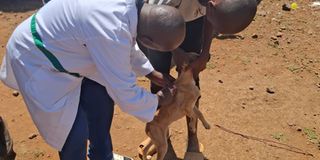
Dogs being vaccinated against rabies in Solai Ward, Rongai Sub-county during the World Rabies Day Celebration

At least 231 dogs were vaccinated against rabies in Solai Ward, Rongai Sub-county, as veterinary professionals joined livestock keepers and community members for an animal-health outreach marking World Rabies Day.
The exercise also saw 1,496 cattle vaccinated against Foot and Mouth Disease (FMD) and Lumpy Skin Disease (LSD), while 1,200 sheep and goats received vaccinations against Sheep and Goat Pox, according to a county activity report.
The outreach was organised by the Kenya Veterinary Association (KVA), Rift Valley Branch, in collaboration with the County Government of Nakuru and Egerton University.

According to the Rift Valley KVA Secretary Dr Patrick Langat Nakuru has an estimated domestic dog population of more than 50,000, making dog vaccination a key component of efforts to prevent the spread of rabies, a disease that can be fatal once clinical signs develop.
He highlights the need for responsible dog ownership, regular vaccination and prompt reporting of suspected rabies cases. It also advises people bitten by animals to seek immediate medical attention.
"Beyond rabies prevention, the exercise will help address livestock diseases that affect farmers' productivity, livelihoods and food security, with cattle, sheep and goats targeted for vaccination," he says.
The commemoration, held under the theme “Stronger Together,” highlighting that about 99 per cent of cases transmitted to humans come from dogs.
He notes that, once a dog contracts rabies, it typically dies within 10 days. Before death, however, it can transmit the virus to other animals or people through its saliva, usually through a bite.
Dr Langat recommends sustained dog vaccination, stronger disease surveillance and increased public awareness on responsible dog ownership and the management of animal bites.
In Kenya, rabies is among the top five prioritised zoonotic diseases. It remains endemic, with an estimated 2,000 human deaths annually, primarily from dog bites.