Tourism sector takes a hit as year-long controversies cast long shadow over Lake Nakuru National Park,
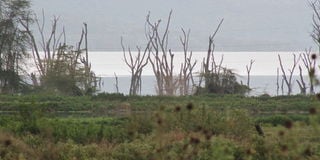
A section of the Lake Nakuru National Park, known as Vietnam known for dangerous fishing activities. Photo taken on November 13

For the better part of 2025 Lake Nakuru National Park has found itself at the center of controversies that cast dark spots on its reputation.
It all started with Brian Odhiambo’s disappearance a case that has followed them throughout the year, then followed by cases of bodies being discovered at the lake, human-wildlife conflict, and the debacle around illegal fishing which have continued to be a thorn in the flesh on the management of the park.
On January 18, Brian Odhiambo, a 31-year-old, was seen being whisked away by Kenya Wildlife Service (KWS) rangers in Kivumbini. Efforts by the family to try and trace his whereabouts in the days after his arrest were futile.

This sparked a flame and for the next six days after his disappearance, protests broke out in Kivumbini with people demanding for the production of Brian Odhiambo.
A month later, on February 21, reports of a body being discovered at the Lake Nakuru National Park surfaced, and upon further investigations, it was revealed that the individual went by the name Justus Porokor.
With the bad publicity around the park brought about by the confrontations, tourism sector was negatively impacted.
From social media, where smear campaigns were lodged against them by netizens bringing up Brian Odhiambo at every instance, to those in the hospitality industry also felt the pinch, so much so that the different stakeholders in the industry came together to organize an activation at the park to try and rebuild the tarnished reputation.
However, on September 30, another body was recovered at the lake; this time it was that of Mach Mayan, a Form Three student who had gone to engage in fishing with his friend, and in the process of fishing, he drowned, leading to a search, and his body was retrieved.
Mtaa Wangu reached out to Gideon Kebati, the Lake Nakuru National Park warden, who confirmed the challenges facing the park.
“We have an electric fence all around the park, but the main challenge is the criminal elements who steal the tight lock. This fence looks like a chicken fence and is specifically designed for wildlife. It is highly galvanised, making it very expensive, and once they have stolen it, they short circuit the other fence and steal it entirely,” he says.
this coupled with the issue of illegal fishing has complicated matters in regard to the protection and conservation of the park.
Kebati regrets that members of the public are still consuming the fish from Lake Nakuru despite various research finding it unfit for human consumption.
The park in-charge says they are currently engaging with the local communities and the government to acquire land beyond the submerged parcels so that they can be able to adequately fence the area to avoid those trespassing and also prevent wildlife from moving out.
“We have been having talks with the local communities and the National Government on solutions to this, and even though it is still in the works, we are looking to purchase the land from those living around the submerged areas so that we can put up a fence that will surround the entire park, and this will help us control human-wildlife conflict,” he concludes.