Rironi–Mau Summit Expressway: Cheers and Concerns as project is finally launched in 2025
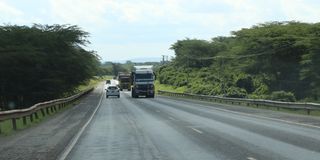
Nakuru - Nairobi highway near Naivasha. The road is to be expanded into dual carriageway in the larger Ririoni -Mau Summit 170km road expansion starting July 1,2025.

For the better part of 2025, the dualling of the Nakuru-Nairobi highway existed more as a promise rather than a solution.
Repeatedly used as an imminent fix to the country’s most dangerous and congested highway, the conversation - now drawn out for months, if not years, and spanning two administrations - has devolved into a vehicle for political mileage as public anticipation stretches thin.
The dualling of part of this Northern Corridor intensified mid-year, when July was floated as the likely launch window.

Government officials spoke confidently about timelines, technical readiness, and financing arrangements, framing the project as unavoidable and urgent.
For many users who depend on the corridor, the month became a marker that relief was coming.
It did not.
July passed. August followed with renewed assurances. September and October brought fresh political pronouncements, often made during public events far from the highway itself.
Still, the road remained a two-lane bottleneck carrying long-haul trucks, public transport, private vehicles, and tourist traffic all at once.
As the delays dragged on, the highway continued to assert itself as both an economic lifeline and a social pressure point with traffic snarl-ups becoming routine, especially during weekends and peak travel periods.
Motorists heading to or from Nakuru, Western Kenya, and the North Rift found themselves immobilized for hours. In some instances, traffic stalled so completely that travelers slept in their vehicles or on the roadside.
And for many, the road has stopped being a means of movement and has become a site of exhaustion and risk.
More troubling, however, has been the cost of human life.
Even as politicians used it for gain, the highway has continued to claim lives.
Between June and December 2025, the corridor has recorded a series of fatal accidents, one of which a family of 13 lost their lives, and just recently (December 13), former Lugari Member of Parliament, Cyrus Jirongo.
While road crashes are a national problem, the Nairobi-Nakuru-Eldoret stretch has long been identified as particularly unforgiving, combining high speeds, heavy freight traffic, and limited room for error.
Many of these accidents reignited public anger, with renewed questions about why a road so central to the country’s economy remained structurally unchanged despite years of planning.
As the months wore on, the project increasingly took on a political character with government leaders repeatedly referencing the road in speeches, presenting it as proof of development momentum and a long-term vision.
By November 28, when the project was finally commissioned, the mood was mixed.
There were genuine excitement and relief that the long wait had at least produced a tangible starting point.
Yet skepticism lingered, and on the same day of its launch, the Motorists Association of Kenya moved to court, filing a petition challenging the concession and tolling (double taxation) of the highway.
In that sense, the Rironi–Mau Summit road remains suspended between two realities.
On paper, it is a billion-dollar flagship infrastructure project meant to unlock regional growth and save lives with a 2027 completion timeline.
On the road itself, it has been a place of delay, fatigue, political theatre, and loss.
Whether the Sh 184 billion road becomes remembered as a turning point or another prolonged infrastructure saga will depend on how quickly construction translates into safer lanes, smoother flow, and fewer roadside memorials.
Until then, the Nairobi-Nakuru-Eldoret Highway remains an idea still struggling to meet reality