Nakuru ranked among counties with highest amounts of pesticide residues in vegetables
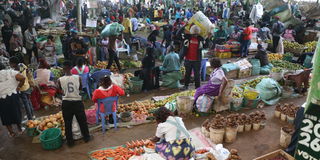
An aerial view of the Wakulima Market open-air market on April 16. Traders warn of an imminent spike in food prices attributed to the recent rise in petrol and diesel costs

Did you know that the way you wash and prepare vegetables at home could significantly reduce the amount of pesticide residues you consume?
A new study that included samples from Nakuru has found that simple household practices such as washing vegetables under running water, soaking them in salted water, and cooking them can cut pesticide residue levels by more than two-thirds before the food reaches your plate.
According to the research, soaking vegetables in salted water, washing them under running water, and then cooking them reduced pesticide residues by an average of 72 per cent, making it the most effective household method tested. Washing followed by blanching reduced residues by 70 per cent, while washing alone reduced residues by 61 per cent.

The findings are part of a study by the Kenya Organic Agriculture Network (KOAN), in partnership with the Route to Food Initiative, the Heinrich Böll Foundation and the University of Nairobi's Department of Public Health, Pharmacology and Toxicology, which sought to determine both the level of pesticide residues in commonly consumed vegetables and the effectiveness of household preparation methods.
The recommendations come against the backdrop of findings that detected pesticide residues in vegetables sampled from Nakuru and three Nairobi markets.
Researchers found that Nakuru accounted for 20 per cent of all samples that exceeded the European Union's Maximum Residue Limits, the third-highest share among the counties sampled after Kirinyaga and Kajiado.
Among the specific findings, tomato samples from Nakuru tested positive for chlorfenapyr, a pesticide classified by the World Health Organization (WHO) as moderately hazardous.
Spinach sampled from Bahati returned two separate detections: difenoconazole, which WHO also classifies as moderately hazardous, and linuron, a pesticide that the European Food Safety Authority classifies as a Category 2 carcinogen.
Overall, the study found detectable pesticide residues in 78 per cent of the 45 vegetable samples analyzed nationally, with 15 samples, representing one-third of the total, exceeding the permissible limits used in the assessment.
The report calls for national agencies, including the Pest Control Products Board and KEPHIS, to strengthen food safety monitoring and farmer awareness on responsible pesticide use. It also encourages households to adopt the household preparation methods shown to be effective in reducing pesticide residues.