Nakuru father treks to Nairobi in desperate bid to save his ailing son
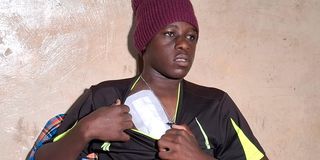
Ismael Kimutai shows where his dialysis catheter is

22-year-old Ismael Kimutai has had to postpone his dream of becoming a civil engineer and instead spends two days every week attached to a dialysis machine.
He now walks with the aid of a stick as he watches his body do what it can no longer do on its own, as his kidneys have failed.
It started when he was in form two, when he first noticed the swelling and his body bloated by morning, back to normal by evening, as if nothing had happened. Went on during his third form
With his KCSE just weeks away, Kimutai says he made one of the hardest phone calls of his young life to his principal to say he couldn't sit his exams.
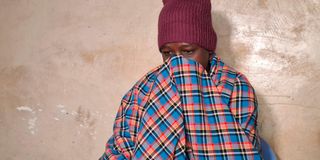
An emotional Joel Kipng'etich Sigira, the father of the ailing Kimutai, while speaking to the press.
What followed has been a long, exhausting journey through dispensaries, wards, and referral hospitals, with six months on temporary dialysis after an accurate diagnosis in 2024 and then a permanent one.
“I now visit the hospital twice a week, every week, with no end in sight unless I get a transplant,” he tells us, adding that his elder brother has agreed to donate a kidney and his doctors are ready.
However, the only thing standing between Ismael and a second chance at life is Sh 3.5 million.
“My parents have sold everything they could think of to help me get proper medication. Two of my siblings have sacrificed their education to ensure I am in great health, but it is still not enough,” says a dejected Kimutai.
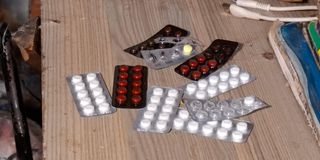
Some of the medication 22-year-old Ismael Kimutai is on to contain his condition.
He says his family has sold almost everything they own, and his mother, through her casual jobs, is using whatever she earns to cover food, medicine, and the weekly dialysis bill.
“This condition has affected everything in my life. I want to get better and go on with life like my peers,” Kimutai says, unable to control his emotions.
“I have sold everything,” says an emotional Joel Kipng'etich Sigira, the father of the ailing Kimutai.
He recalls how, when his son first fell ill, he had some savings he believed would be enough to see them through.
“At first, I thought it was just the flu, and I never expected it to drain us like this,” he says.
Arap Sigira recalls having sold ten sheep and five cows, and when that was not enough, the family turned to the community for help. They’ve held about five harambees, raising about Sh 50,000 in the last one, and gathered letters from various local leaders appealing for support to help offset the mounting medical bills.
But it’s still not enough.
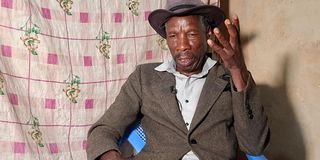
Joel Kipng'etich Sigira, the father of Ismael Kimutai
“This disease is like an animal that never closes its mouth. The day the money ran out, I sold an acre of land and am only left with just a quarter acre to my name,” he says on the verge of tears, adding that now, their life is in God's hands.
His desperation made him walk for several days to Nairobi in search of Senator Aaron Cheruiyot, hoping to get help, but the mission was unsuccessful.
He says he used to farm five acres of potatoes, but that too is gone now, and today, his only occupation, as Arap Sigira puts it, is walking around searching for help.
“If there is any way I can get the money for this kidney transplant, I would be so relieved so that even I can finally rest,” he pleads, adding that his wife, a mother of five, has visibly lost weight from the burden she carries, working tirelessly as the family struggles to survive.
Jecinta Ngendo, the landlady at their rental home in Mawanga, says she has chosen to waive the rent owed by the Sigira family, moved by the weight of the medical bills they are battling.
She says the family only managed to pay rent twice since moving in in December 2024, and she has forgone the outstanding balance for all the months since.
“As neighbors, we have had to come together in whatever ways we can to support Kimutai and his father. We are now calling on well-wishers everywhere to help this family rebuild and find some form of normalcy again,” she says