Kidney patients lament treatment disruption after breakdown of dialysis machines at Nakuru and Naivasha hospitals
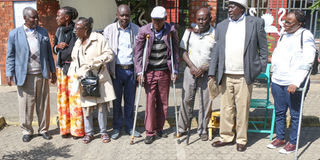
Kidney patients seeking dialysis at Nakuru County Referral and Teaching Hospital have raised concerns over long queues caused by faulty machines,

Patients receiving dialysis at the Naivasha Sub-County Referral Hospital are struggling to access adequate treatment following the breakdown of several machines at the facility, with some forced to settle for shorter sessions as the remaining equipment serves more patients.
Samuel Githinji, a patient who undergoes dialysis at the hospital twice a week, says the situation has made access to the life-sustaining procedure difficult, with patients sometimes receiving only three hours of treatment instead of the usual four.
Githinji says the pressure on the available machines means patients have to adjust to shorter sessions to allow others waiting for treatment to be attended to.

“Sometimes you go for three hours, which is not enough. You are supposed to get four proper hours of dialysis,” he says.
He notes that a full dialysis session takes about four hours, with additional time required to connect and disconnect patients from the machines.
Githinji says the breakdowns have forced the facility to rely on the remaining functional machines to serve patients who depend on regular treatment, raising concerns about the adequacy of services available to them.
He notes that he undergoes dialysis twice a week and has relied on the hospital for treatment since his condition began in 2022. He recalls that the unit previously operated more reliably, with all five machines working.
“Before, things were fine. All five machines were working. The dialysis unit was functioning well,” he says.
The challenges, he says, extend beyond the availability of machines to the cost of managing the condition.
Githinji says patients sometimes struggle to obtain medicines prescribed for other conditions, including high blood pressure and diabetes, even when they expect the medication to be covered by their health insurance.
He says some patients end up buying the medicines out of pocket, adding to the financial burden of managing a condition that requires regular hospital visits.
At Nakuru Teaching and Referral Hospital, John Munya has been receiving dialysis twice a week for the past six years, with each session lasting four hours.
However, he says frequent breakdowns of dialysis machines have disrupted treatment, forcing the hospital to reduce sessions to three hours to accommodate the growing number of patients.
Munya, who was among patients protesting over the state of the renal unit, maintains that the county government has neglected the facility, with machines remaining unrepaired despite repeated complaints.
He says only three of the nine machines were operational, leaving nurses struggling to accommodate patients and forcing some to settle for shorter sessions.
“The machines have been breaking down frequently. Sometimes you will find three are working or two. There has never been 100 per cent operational and are now forced to undergo a three-hour session,” he says.
“We have started feeling the repercussions. Some of us are sick, some are weak because of that accumulation of one-hour reduction. I know they are expensive, but they should repair them,” he says.
Sylvia Wanjiru, another patient who receives dialysis during the afternoon shift, says she was shocked when nurses informed her that sessions had been reduced to three hours to accommodate other patients.
“To be dialyzed for three hours is affecting us. Urea and potassium are building in our bodies, yet we are not getting the help we need. Our lives depend on machines. The three hours is not enough. Patients are breaking down,” she says.
Wanjiru appeals to devolved unit to urgently intervene, saying repeated attempts to secure a meeting with the county health executive have been unsuccessful.
Efforts to obtain a response from the county government have been unsuccessful as the Naivasha Sub-County Referral Hospital, Med Sup Dr. Murage Mumbi referred questions to the chief officer, saying she is not authorized to speak to the media.
At Nakuru Teaching and Referral Hospital, hospital director Santosh Deveraj maintains that the dialysis machines are working, disputing the patients' accounts of equipment breakdowns.
The county health executive Stephen Kuria said he would call back but had not responded despite repeated attempts to reach him.