How acquisition of cutting-edge machines has redefined healthcare services at the Nakuru Teaching and Referral Hospital
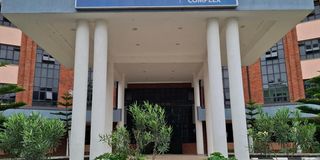
Nakuru County Referral and Teaching Hospital (PGH), outpatient complex.

For years Nakuru Teaching and Referral Hospital (PGH) grappled with lack of modern technological equipment which made treatment and diagnostics services slow and sometimes difficult.
The challenge, however, was resolved in 2025 when the hospital acquired some cutting-edge medical equipment which quietly reshaped care for thousands of patients even as concerns emerged over the functionality, downtime, and utilization of some life-saving machines.
The hospital received major technological upgrades that signaled its growing role as a regional health hub serving more than 10 counties.

One of the most consequential additions was the installation of a second Radiotherapy machine at the Regional Cancer Centre.
The machine, designed to deliver high-precision radiotherapy, has eased pressure on cancer patients who previously faced long waiting times for treatment. Beyond easing congestion, the second unit offers continuity of care in the event of equipment failure, a persistent challenge in public hospitals.
Unlike chemotherapy, which affects the entire body, the state-of-the-art radiotherapy machine delivers targeted radiation directly to tumors, sparing surrounding healthy tissue.
Medics say treatment is first simulated and carefully planned before beams are directed with pinpoint accuracy, a process that has significantly improved outcomes for patients undergoing radiotherapy.
Diagnostics also took a major leap forward with the commissioning of a new A-enabled 128-slice CT scanner, replacing an older 64-slice machine that had been out of service for months. The upgrade which cost taxpayers Sh 130 million has doubled the hospital’s scanning capacity to about 100 patients per day, with trauma and oncology cases accounting for the bulk of demand.
Nakuru’s position along the Northern Corridor means road traffic accidents remain a major source of emergency cases, while cancer patients rely on CT imaging for staging and follow-up. Health workers say the improved image quality and shorter turnaround times have already transformed clinical decision-making, particularly in emergencies where minutes can mean the difference between life and death.
In the fight against infectious diseases, Nakuru County has also strengthened tuberculosis detection through the rollout of ultra-portable AI-powered digital X-ray machines. With over 2,200 drug-susceptible TB cases and 36 drug-resistant cases reported since January, the county now ranks among the top five nationally.
To respond, ultra-portable digital X-ray machines powered by artificial intelligence (AI) were deployed across six sites for community outreach under the National TB Programme, with support from the Global Fund. The machines allow rapid screening in hard-to-reach areas, helping identify cases earlier and reducing transmission.
Yet amid these gains, some equipment remains underutilized.
Blood services also came into focus with renewed attention on an apheresis machine at the Nakuru Regional Blood Transfusion Centre - technology that has existed for years but has often remained idle despite its potential to transform platelet collection.
The technology allows clinicians to collect specific blood components, such as platelets, which are in high demand for cancer patients and those with severe illnesses.
With apheresis, a single donor can provide up to 200 milliliters of platelets in one sitting, an amount that would otherwise require several whole-blood donations.
Medics say the machine has significantly improved both the quality and volume of platelets available, strengthening critical care and oncology services.
Additionally, the hospital’s mammogram machine, the only one in a public facility in the county, came into the limelight as attention was drawn to its continued underuse, recording fewer than 50 women for screening each month.
Health officials describe the numbers as worrying, especially given that women aged 40 and above are advised to undergo annual screening.
As the county marked Breast Cancer Awareness Month, the county government acknowledged that awareness alone is no longer the problem. The services exist, the machine is functional, and early detection dramatically improves survival rates, yet uptake remains low.
Beyond patient care, NTRH continues to make strides in environmental and occupational safety through an in-house healthcare microwave incinerator and waste shredding unit.
The facility processes up to one ton of medical waste daily, ensuring infectious materials are safely segregated, shredded, sterilized, and disposed of.
The system handles everything from used syringes and gloves to blood-stained materials, reducing risks to health workers and surrounding communities.
For a hospital of NTRH’s size and regional importance, the waste management facility represents an often overlooked but essential investment in public health.
For Nakuru PGH, the year offered proof that modern equipment can change lives; however, while investments in high-end equipment are vital, they must be matched with sustained public engagement, referral systems, and trust-building to ensure the technology delivers its full promise.