How a donkey owner’s mental health impacts the animal’s well being
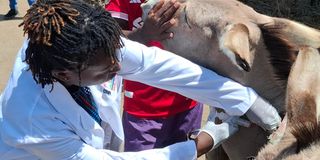
Josephine Wanjiru, an Animal Health Officer in Bahati Sub-County administers a rabies vaccine to a donkey in Bahati on July 15.

As dawn breaks over Bahati, dozens of donkey owners are already on the move with their animals pulling carts loaded with water, construction materials and firewood, helping families earn an income in a region where every shilling counts.
Donkeys are a source of livelihood and a means of transport for many households, yet behind their steady clip-clop of hooves, the animals’ mental well-being often goes unnoticed.
While many donkey owners could be navigating financial uncertainty, rising living costs, family responsibilities and the daily pressures of providing for their households, these challenges could equally take a toll on their animals’ mental wellbeing, not only influencing how they cope with life but also how they care for the animals they depend on.
Animal welfare advocates are increasingly drawing attention to the connection between human wellbeing and animal welfare, noting that stress, anxiety and economic hardship can affect the quality-of-care working animals receive.
Cynthia Kioko, a Community Development Officer with Farming Systems Kenya (FSK), notes that a person’s mental health influences how they behave and how they relate to their donkey.
“Stress, financial constraints and the pressure to make one more trip for one more shilling can all influence owners' behavior towards the animals they rely on. Under such pressure, some may resort to excessive whipping, shouting at their donkeys, or overloading them in a bid to earn more money through additional trips,” she notes.
Asked how to identify a donkey that isn't mentally healthy, Cynthia describes a set of signs rooted in fear and withdrawal rather than obvious injury.
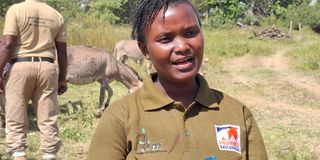
Cynthia Kioko, a Community Development Officer with Farming Systems Kenya (FSK), during an interview with the media
“A donkey that has been whipped repeatedly often carries that fear into every interaction, flinching from contact or turning aggressive as a form of self-protection. At a certain point, when overwhelmed, it becomes difficult to control and reluctant to work, even when pushed. It also tends to withdraw from other donkeys, appearing dull and generally in poor condition,” she says, adding that the signs are easily mistaken for stubbornness or simply overlooked in the routine of daily labor.
Cynthia argues that mental and physical well-being cannot be viewed separately. Just as human beings are affected by emotional and psychological challenges, she says donkeys also experience the effects of how they are treated.
Overwork, inadequate rest, and repeated whipping not only compromise the animal's welfare but can also reduce its productivity and appetite. Feeding practices also play a critical role, from the quality and quantity of feed provided to whether the animal has access to adequate water and sufficient time to rest.
Josephine Wanjiru, an Animal Health Officer in Bahati Sub-County, points to the area's high donkey population as the reason vaccination matters so much.
According to her, the county's free vaccination programme reduces transmission between animals and the communities that depend on them. Beyond protecting animal and public health, she notes that preventing disease also eases the emotional and financial strain on owners who rely on their working animals for their livelihoods.
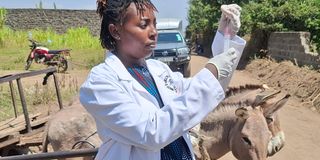
Josephine Wanjiru, an Animal Health Officer in Bahati Sub-County draws out vaccine medication to be administered to donkeys in Bahati area through the county's free vaccination drive.
Kenneth Wamuga, FSK's Executive Director, notes that while the sensitization seeks to improve the welfare and wellbeing of working donkeys, the Nakuru Animal Welfare Act makes cruelty, including overloading and other forms of abuse, a punishable offence and places a legal obligation on owners to safeguard the welfare of their donkeys.