From hiccups to hope: Nakuru county records major strides in maternal health services despite early setbacks
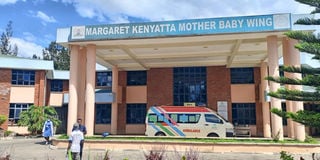
Margaret Kenyatta Mother and Baby Wing at the Nakuru Teaching and Referral Hospital (NTRH) on December 9,2025

The year 2025 laid bare deep contrasts for maternal health in Nakuru County, marked by painful loss, public outrage, and renewed efforts to strengthen care for mothers and newborns.
From a death that ignited national debate to investments in surgical training, facility upgrades, and infant survival programs, the year exposed both the fragility and resilience of the county’s maternal health system.
The year began on a sad note in April following the death of 27-year-old Elizabeth Wairimu Njoroge during the Easter weekend at the Margaret Kenyatta Mother and Baby Wing at Nakuru Teaching and Referral Hospital.

Her family blamed the hospital for negligence, saying she had gone three weeks past her due date but showed no signs of distress throughout her pregnancy or even on the day she was admitted.
According to her husband, Benson Kinyanjui, Wairimu’s condition did not appear to warrant alarm, making her sudden death all the more devastating. News of her passing sparked outrage on social media, with Kenyans questioning the quality of care at one of the county’s flagship maternal facilities.
The public pressure forced the County Executive Committee Member for Health, Roselyn Mungai, to issue a statement acknowledging a breakdown in communication between the hospital and the family.
Even as the county grappled with that loss, July brought renewed focus on preventing similar tragedies as the county announced an ambitious target of reducing maternal deaths by two-thirds, backed by specialized training for critical medical staff to better manage life-threatening delivery complications.
Medical Superintendent Dr James Waweru said the program focused heavily on cesarean sections and other surgical procedures, while also addressing teamwork and coordination in operating theatres.
He noted that many childbirths complications stem from inadequate surgical skills or poor support during operations.
Beyond technical skills, the training emphasized prioritizing urgent cases, effective assistance during surgery, speaking up when something is done incorrectly, and monitoring procedure timelines to avoid fatal delays.
Dr Waweru added that the county, in collaboration with its partners, was rolling out digital learning infrastructure across public hospitals.
Cameras installed in operating theatres would allow surgeries to be live streamed to teaching rooms and recorded for later review.
“These recordings aren’t just for trainee doctors to learn certain skills,” he said. “They also help teams reflect on what went right or wrong in a surgery. We can now objectively assess how long a procedure took and whether decisions were timely.”
September marked one of the year’s most visible wins.
That month, at around 11:30 a.m. on September 2, jubilation filled Bondeni Sub-County Hospital as Josephine Wangari, the facility’s first expectant mother of the day, was wheeled into a revived maternity theatre.
Seventy years after the hospital’s establishment, it successfully conducted its first cesarean section in a theatre that had remained dormant for decades.
For years, expectant mothers in Nakuru East and surrounding areas requiring surgical deliveries were routinely referred to the already crowded PGH because Bondeni lacked a functional theatre.
Medical Superintendent Dr Joyce Yator said the revival would significantly ease the burden on both patients and staff as the hospital handles an average of 100 births every month, with about half previously referred to PGH whenever complications arose.
“This is a huge relief for us as a facility and our patients,” Dr Yator said. “Mothers can now access safe deliveries closer to their homes, and our staff will be gaining valuable experience in handling cases that we previously had to refer.”
CEC Health Roselyn Mungai described the move as part of a broader strategy to grow the capacity of low-volume level four hospitals while decongesting PGH, which has long struggled with patient overload.
Earlier in November, as Nakuru marked the Global Day of Prematurity on November 17, medics highlighted another critical dimension of maternal and newborn health: the role of fathers.
Consultant pediatrician and head of pediatrics, Dr Alice Nkirote, said active paternal involvement significantly improves survival and healthy development for preterm babies.
To promote family-centred care, hospitals increasingly involve families from the beginning, including through Kangaroo Mother Care.
“But remember, it’s not just supposed to be Kangaroo Mother Care,” Dr. Nkirote said. “It can also be Kangaroo ‘Father’ Care, and we are really emphasizing the role of fathers in the care of preterm babies.”
Progress was also evident in December, when the county celebrated a milestone in preventing infant infections.
More than 200 children born to mothers living with HIV reached their second birthday HIV-free.
According to county data, mother-to-child transmission dropped from 15.4 per cent in 2019 to 6.1 per cent in 2024, a decline described by Racheal Kiuna, the county AIDS and STI Coordinator as “the strongest proof” that prevention programs were working.
These programs include antenatal HIV testing, maternal antiretroviral therapy coverage, and close follow-up of exposed infants, offering hope that sustained investment can deliver measurable results.
However, the year ended with fresh concerns and by December, disturbing videos circulating on social media exposed severe overcrowding at the Margaret Kenyatta Mother and Baby Wing.
In some cases, more than two mothers were seen sharing a single bed alongside their newborns, with congestion worsening during visiting hours as relatives sat on occupied beds due to limited space.
A Mtaa Wangu spot check conducted on December 8 confirmed the scenes with two to three mothers, each with their babies, found sharing single beds in the antenatal ward as nurses struggled to cope with overwhelming patient numbers.
Yet even amid these conditions, many mothers said they deliberately chose the facility because of its reputation for handling complex cases.
One Ann Nyambura, a mother to a one-year-old girl, said she was advised by fellow mothers that the hospital was more reliable than smaller facilities, where complications often lead to referrals due to a lack of pediatricians or specialized newborn care.
Some women, particularly from informal settlements, also cited social perceptions, saying there was a sense of prestige associated with delivering at the mother and Baby Wing despite the congestion.
Indeed, the year 2025 laid bare painful systemic failures, but it also showed what is possible when investment, accountability, and innovation align.
For many mothers, the hope is that the lessons of this year will translate into safer births, dignified care, and a system that values every life equally.