Comrades power: Meet Nakuru male campus students championing the fight against gender violence
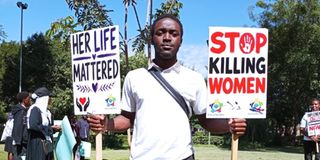
Wesley Snipes holps pluck cards for a campaign walk against femicide in March 2026, theme around breaking the silence to end violence

For Wesley Snipes Karimi, the fight against gender-based violence (GBV) began with a tragedy that hit close to home.
In May 2026, a staff member at ICS College in Nakuru was allegedly stabbed to death by her husband, an incident that left students shaken and searching for answers about the violence women continue to face in their homes and communities.
The tragic incident became the beginning of a conversation about GBV menace led by Wesley and his colleagues.


“My friend Gabriel and I started having conversations around gender-based violence and femicide. As the Student’s President at ICS College and we formed Students Against Gender-Based Violence (SAG), a student-led movement seeking to involve young people in the fight against GBV,” says Wesley.
Initially, their discussions focused largely on femicide, particularly following the murder of Annitah Mugweru, which had sparked outrage and renewed conversations about violence against women.
But the conversations soon grew beyond the college.
After attending a campaign walk against femicide, Wesley returned to the college determined to turn the discussions into action. He brought together other students who shared his concern, and together they formed SAG.
What began as conversations among the two friends gradually developed into a movement of 33 college students seeking to educate young people and encourage them to become part of the solution.
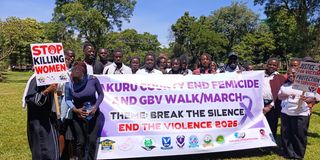
Wesley Snipes joins others for a campaign walk again femicide on March 2026 theme around breaking the silence to end violence
However, Wesley soon realized that GBV was not only about physical violence.
As student president, he witnessed bullying and harassment firsthand in WhatsApp groups created by fellow students.
“I could see my classmates contributing in the groups with hate comments. They situation got out of hand, and I had to seek support from the school administration and also report the matter at central police station,” Wesley narrates.
He notes that students could be attacked, humiliated or intimidated by classmates behind their phones, bringing a new dimension to the conversations SAG was having.
The experience pushed SAG to broaden its focus to Technology-Facilitated Gender-Based Violence (TFGBV).
The group is now using TikTok and hopefully more digital platforms to create content that educates students and communities about GBV and the different ways technology can be used to facilitate abuse.
“Our content seeks to raise awareness about online harassment, cyberbullying, threats and other forms of digital abuse while encouraging students to speak out and support survivors,” he noted.
Wesley believes young people should not only be viewed as victims or observers of GBV but also as part of the solution.
Through SAG, he hopes students can have difficult conversations, challenge harmful attitudes and learn how to recognize violence before it escalates.