Why farmers in Lare are turning to organic farming
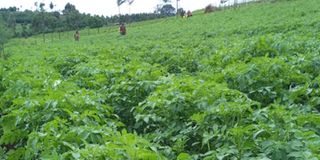
Chesubeno Self Help Group Potato farm project started from the proceeds of selling the green leafy vegetables.

A growing number of farmers in Lare are embracing organic farming as demand for chemical-free food continues to rise. Through the Lare Organic Farmers Self Help Group, farmers are now shifting from conventional farming methods to organic practices in a bid to promote healthy living and sustainable agriculture.
According to the group’s chairman, Patrick Magu, the initiative was formed in November last year after members realized there was increasing interest in food produced without chemicals.
“We started the group because we wanted to eat food with no chemicals, and many people also needed that type of food. Since we had the space, we saw it as a good idea to start growing organically,” says Magu.

He explains that the group received support from partners from Israel, who introduced them to organic farming techniques and continued to train them on better farming methods.
Although most members previously practiced conventional farming, Magu notes that many only used manures alongside fertilizers thinking that organic farming only required manure, making the transition to organic farming easier.
“Most members had no idea about organic farming before, but they have now accepted it and started growing vegetables such as sukuma wiki, tomatoes and eggplants,” he highlights.
The group currently has more than 60 members, comprising both young and older farmers. Before adopting organic farming, many of them mainly cultivated maize.
Despite the growing interest in organic farming, Magu admits that accessing reliable markets remains a major challenge for the group. However, he expressed optimism following recent meetings aimed at connecting farmers to buyers.
“We had a problem with getting a market for our produce, but after the meetings we have had, there is hope,” he says.
The group is also seeking support to help members produce their own organic fertilizer, which they believe would reduce costs and strengthen their farming activities.
he farmers, Joyce Wairimu, notes she joined organic farming after attending a farmers’ meeting last year. Although she had been farming before, she had never practiced organic farming.
“After the meeting, I became interested and that is how I started organic farming. The learning process has been good and now we are eating healthy food,” she says.
On her small piece of land measuring about 50 by 100 feet, Wairimu grows sukuma wiki, spinach, cabbage, tomatoes and managu. She explained that she divided the land into smaller portions to maximize production.
She describes organic farming as cheaper and healthier compared to conventional farming but requires to be worked on more for maximum production noting there's no shortcut in organic farming.
“The advantage is that we are getting good food with no chemicals, and it is also cheaper,” she says.
However, like many other farmers in the group, Wairimu cites lack of market access as the biggest challenge after harvesting produce.
Even so, Wairimu remains optimistic and plans to expand her organic farming activities in the future while encouraging skeptical farmers to give it a try.
“Everything starts by trying, and it is working. People should try it,” she says