Innovation on the streets: How I expanded my business beyond product sales to service model

Robert Kihara the founder of Sneaker Spa Nax poses for a photo on 18 January 2026

When Robert Kihara the founder of Sneaker Spa Nax started selling sneakers in early 2025, he did not initially plan to venture into sneaker cleaning. However, close interaction with customers soon revealed a market gap that has since grown into a viable small business in Nakuru town.
“I started with selling sneakers. But after about six months, customers would come back and tell me, ‘My shoes are dirty.’ That is when I realised there was an opportunity to offer cleaning services and charge a small fee, benefiting both the customer and me,” Kihara says.
The transition from retail to service was gradual but strategic. According to Kihara, many customers lacked proper knowledge on sneaker care, often damaging expensive shoes through incorrect washing methods.

“Someone would wash their shoes at home, and they look okay. But when we clean them professionally, they go back almost to their original condition,” he explains.
Kihara invested in the business in two phases. The first phase involved sneaker sales, which required between Sh 100,000 and Sh 200,000 in capital. He broke even after four months.
The second phase involved importing and setting up a sneaker-cleaning machine at an additional cost of about Sh 200,000.
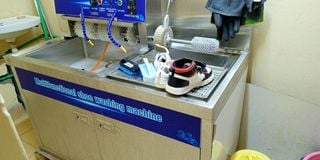
Shoe cleaning machine used at Sneaker Spa Nax on 18 January 2026
“After importing the machine, it took another four to five months to break even,” he says.
Like many startups, trust was the biggest early challenge. “Some sneakers cost between Sh 15,000 and Sh 20,000. Customers were afraid to leave such shoes with someone new,” Kihara recalls.
He notes that over time, word-of-mouth referrals helped change perceptions. “A satisfied customer is the best billboard,” he notes. “Once people see before-and-after results, confidence grows and customers start streaming in.”
Kihara notes that marketing has played a central role in the business’ growth. Beyond walk-in visibility, social media has been a major driver.
The business now serves customers beyond Nakuru, receiving sneaker consignments from towns such as Thika through courier services.
Highlighting the pricing is flexible and depends on several factors, including shoe type, condition, time required, and quantity.
“We don’t have fixed prices,” Kihara explains. “On average, charges range between Sh 100 and Sh 500 per pair, but bulk clients get discounts. The average customer pays about Sh 200.”
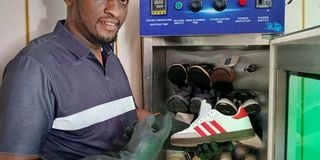
Robert Kihara the founder of Sneaker Spa Nax demonstrating how the shoe drying machine works on 18 January 2026
An accountant by profession, Kihara balances his training with entrepreneurship by delegating operations while maintaining oversight. He currently employs two trained staff members.
“When I imported the machine, I took one full month to train myself first,” he says. “Then I trained my staff using samples. Sneaker cleaning is delicate you can easily ruin a shoe if you don’t understand the material.”
Customer demand has evolved alongside growing awareness of sneaker care. “People are more conscious now,” he observes. “With better equipment and techniques, the market is shifting from casual washing to professional care.”
Kihara’s clientele is largely working-class professionals, especially women and bachelors.
At 36, Kihara says the business has taught him resilience and discipline. “You don’t open today and expect profits tomorrow,” he says. “When challenges come, don’t complain. Appreciate small wins, and growth will follow.”