House56 @ 12: A testament of consistency and creativity in brand success
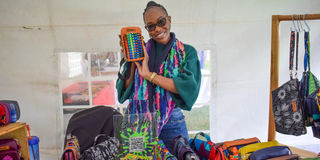

When Margaret Nyanchama founded House56 nearly 12 years ago, she did not set out with a grand business blueprint. Instead, what began as a creative pursuit slowly evolved into a thriving bag brand shaped by experience, client feedback, and resilience.
Initially, Margaret ventured into fashion by designing clothes. However, as demand grew, so did the operational challenges. Without a physical shop, managing multiple clothing sizes became increasingly complex. Consequently, she began experimenting with accessories, starting with wallets, which offered standard sizing and simpler production logistics.
The turning point came after a difficult client experience. After investing time in designing and producing a custom outfit, the client rejected the final product. Although Margaret had already started exploring accessories, that moment pushed her to fully transition into bag-making.

Before the complete shift, she had been making cushion covers using leather and fabric blends. When she had leftover material from one such project, she decided to experiment. Drawing inspiration from wallets she had seen elsewhere, she combined leather with vibrant kitenge fabric to create her first wallet.
The product quickly caught attention. A friend purchased it and introduced it to colleagues at her workplace, generating House56’s first wave of customers.
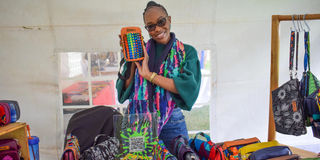
“That first sale meant everything,” Margaret recalls. “It showed me there was potential.”
Over time, House56’s catalogue expanded steadily. What began with wallets evolved into tote bags and eventually expanded into a diverse product line of more than 20 bag designs. Today, the brand offers sling bags, multiple tote variations, sleeves, and new designs in development.
This responsive approach has allowed House56 to maintain relevance while staying true to its handcrafted identity. Prices currently range from Sh 600 to Sh 4,000, making the products accessible while reflecting the craftsmanship involved.
Unlike many entrepreneurs who launch with significant startup capital, Margaret’s investment was modest. The primary initial cost was a sewing machine, purchased with financial support from her mother. Beyond that, the business grew incrementally, reinvesting profits back into materials and production.
“I didn’t start the business because I wanted to start a business,” she explains. “It just grew into one.”
The journey has not been without obstacles. After starting in Nairobi, Nyanchama relocated to Nakuru, where sourcing materials proved challenging. However, over time, she built relationships with suppliers willing to source materials on her behalf.
Additionally, fluctuations in raw material availability have forced the brand to phase out certain designs. In some cases, loyal clients have requested discontinued bags made with materials that are no longer accessible locally. While this underscores strong brand loyalty, it also highlights the constraints faced by small-scale manufacturers.
Although most of House56’s clients are based in Nairobi, Margaret is actively working to grow her presence in Nakuru. She believes the local creative industry is expanding, but awareness remains limited.
Encouragingly, Nakuru-based customers who discover House56 online are often surprised to learn the brand operates locally and many become repeat buyers. Margaret believes there is a growing appreciation for handmade craftsmanship among consumers willing to invest in quality.
Looking ahead five to ten years, Nyanchama envisions a fully operational workshop and a structured team though at the moment she occasionally hires full-time and part-time staff.
Currently operating largely as a one-person business, she acknowledges that scaling further will require additional skilled hands. However, quality control remains non-negotiable.
“Customers buy quality,” she explains. “Whoever comes in to help must maintain the standard.”
Past experiences have reinforced this principle. On occasions when outsourced work did not fully meet her expectations, clients questioned consistency. As a result, she prioritizes training and working only with individuals committed to upholding House56’s craftsmanship standards.
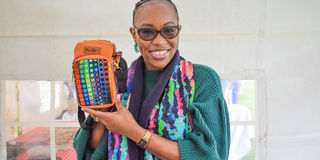
Throughout the journey, family has remained Margaret’s strongest support system. From financial backing in the early days to showing up at markets and offering logistical support, their involvement has been instrumental.
As House56 approaches its 12-year milestone, the brand stands as a testament to adaptability, customer-driven innovation, and steady organic growth.
“The creative market in Nakuru is booming,” she says. “We are here, and we are ready to make it as good as if not better than what’s happening in other cities.”