Business closures and new beginnings: Nakuru’s uneven commercial journey in 2025
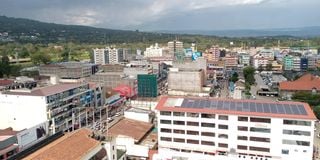
A photo of Nakuru Skyline

Nakuru’s 2025 business landscape tells a story that is both paradoxical and revealing.
On one hand, the town has witnessed the quiet closure of long-standing, traditional businesses that once formed the backbone of its commercial identity.
On the other, the same period has seen new enterprises expanding rapidly, Nairobi-based businesses setting up shop in the city, and commercial buildings rising across different parts of the town with others still waiting for tenants. This ironic dance has defined Nakuru’s economic conversation throughout the year.

The closure of traditional businesses like Stage Matt Supermarket has been the most visible. These enterprises, some of which had operated for years, struggled to adapt to changing consumer behavior, rising operational costs, and evolving market expectations.
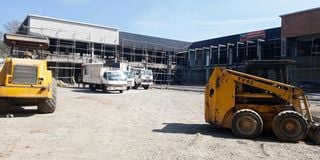
Construction of a new branch of Quick Mart Supermarket near Statehouse
As foot traffic patterns changed and customers became more selective with spending, some businesses found it difficult to sustain themselves, ultimately shutting their doors. Their exit marked the end of familiar routines and highlighted how unforgiving the current business climate can be for those unable to pivot.
At the same time, 2025 paradoxically proved to be a year of expansion for other players. New businesses entered the market with models that aligned more closely with contemporary consumer needs, while existing ones scaled up operations despite the economic pressure. This contrast underscored a clear reality: survival in Nakuru’s business environment was less about longevity and more about adaptability.
Adding another layer to this irony was the growing presence of Nairobi-based businesses in Nakuru. Throughout the year, firms that traditionally operated from the capital chose to extend their footprint into the city. Their move signaled Nakuru’s rising appeal as a commercial hub, driven by population growth, increased urbanization, and improved infrastructure.
However, their arrival also intensified competition, particularly for local entrepreneurs. For some, this influx brought fresh standards, variety, and employment opportunities; for others, it heightened the pressure to compete with well-resourced brands.
Running parallel to these shifts was a visible construction boom in commercial real estate. New office blocks, retail spaces, and mixed-use developments continued to reshape Nakuru’s skyline in 2025.
Developers appeared confident in the city’s long-term potential, investing heavily in commercial buildings meant to accommodate the growing business interest. Yet, the irony persisted. While some buildings filled up quickly, others remained partially occupied. This uneven occupancy raised questions about timing, affordability, and alignment with actual market demand.
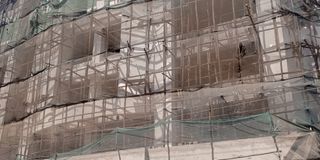
A building coming up along Mburu Gichua Road
In 2025, social media emerged as a critical lifeline for businesses in Nakuru, with many entrepreneurs leveraging platforms like TikTok, Facebook, and WhatsApp to reach customers more directly and cost-effectively. Businesses capitalized on short-form videos, influencer collaborations, and real-time customer engagement to market products, announce offers, and build brand loyalty beyond physical locations.
For some, a strong online presence helped cushion the impact of reduced foot traffic, while for others it became the primary driver of visibility, sales, and growth in an increasingly competitive business environment.
Taken together, Nakuru’s 2025 business journey was not a straightforward success story nor a tale of decline. Instead, it was a year of transition marked by contradictions, closures alongside expansions, new buildings alongside empty spaces, and external investment alongside local struggles. The irony lay in the fact that growth and strain existed side by side, often on the same street.
As the city looks toward 2026, the lessons from this year are clear. Nakuru is evolving, but evolution demands balance. For businesses, adaptability is no longer optional. For developers and investors, aligning ambition with real market capacity will be crucial.
And for the city as a whole, the challenge remains ensuring that growth is inclusive enough to support both new entrants and long-standing players in this ever-changing economic dance.